How Taxes and Fees Change Your Max Auction Bid (Worked Examples)

In this article (9 sections)
Most flippers ignore taxes when modeling their max auction bid. The logic: "I don't pay sales tax on my purchase, so it doesn't matter." That logic is wrong, and it costs money on every flip.
Sales tax matters because your buyer pays it. A high-tax state compresses your buyer's willingness to pay (OTD-anchored), which lowers your asking price ceiling, which lowers your max profitable bid. This guide walks the math with real numbers.
For the calculator: Copart Fee Calculator in Max Safe Bid mode.
LocalIQ™ market snapshot
What top flip candidates are asking right now
| Model | Listings | Median asking price |
|---|---|---|
| GMC Sierra 1500 | 523 | $29,995 |
| Chevrolet Silverado 1500 | 1,367 | $25,000 |
| Toyota Tacoma | 1,164 | $27,516 |
| Ford F-150 | 2,592 | $23,995 |
| Ram 1500 | 992 | $22,900 |
| Ford Mustang | 571 | $20,995 |
| Jeep Wrangler | 548 | $25,089 |
| Chevrolet 1500 | 539 | $20,900 |
LocalIQ™ asking-price median · 8,296 listings · updated every 6 hours. National, last 8 model years; asking price is your resale ceiling, not a promised sale price.
The Buyer's OTD Constraint
Used car buyers shop by total out-the-door price, not asking price. A $14,000 listing in California costs the buyer roughly $15,200 OTD (8.6% effective tax + fees). The same $14,000 listing in Oregon costs $14,050 OTD (no sales tax, minimal fees).
The buyer in California, looking at a $15,000 budget, will not buy your $14,000 car — it pushes OTD over their ceiling. They will look at $13,000 cars instead. To win that buyer, you need to list at ~$12,800-$13,000.
Same car. Same condition. Two different asking-price ceilings driven entirely by state tax differential.
How This Cascades to Max Bid
The cascade:
- Buyer's max OTD = $15,000 (whatever they can afford)
- State sales tax adjusts the asking-price ceiling
- Asking price ceiling becomes your resale anchor
- Max bid is derived backward from resale anchor
For a flipper's max-bid math:
Max bid = (Resale anchor) − (Sales tax on resale, in your state) − (Transport) − (Repairs) − (Profit) − (Copart fees on max bid)
The sales tax line item shows up in your math because YOU collect it from the buyer (or the buyer pays at their DMV). Either way, it eats into the price your buyer will tolerate.
Worked Example: Same Car, Three States
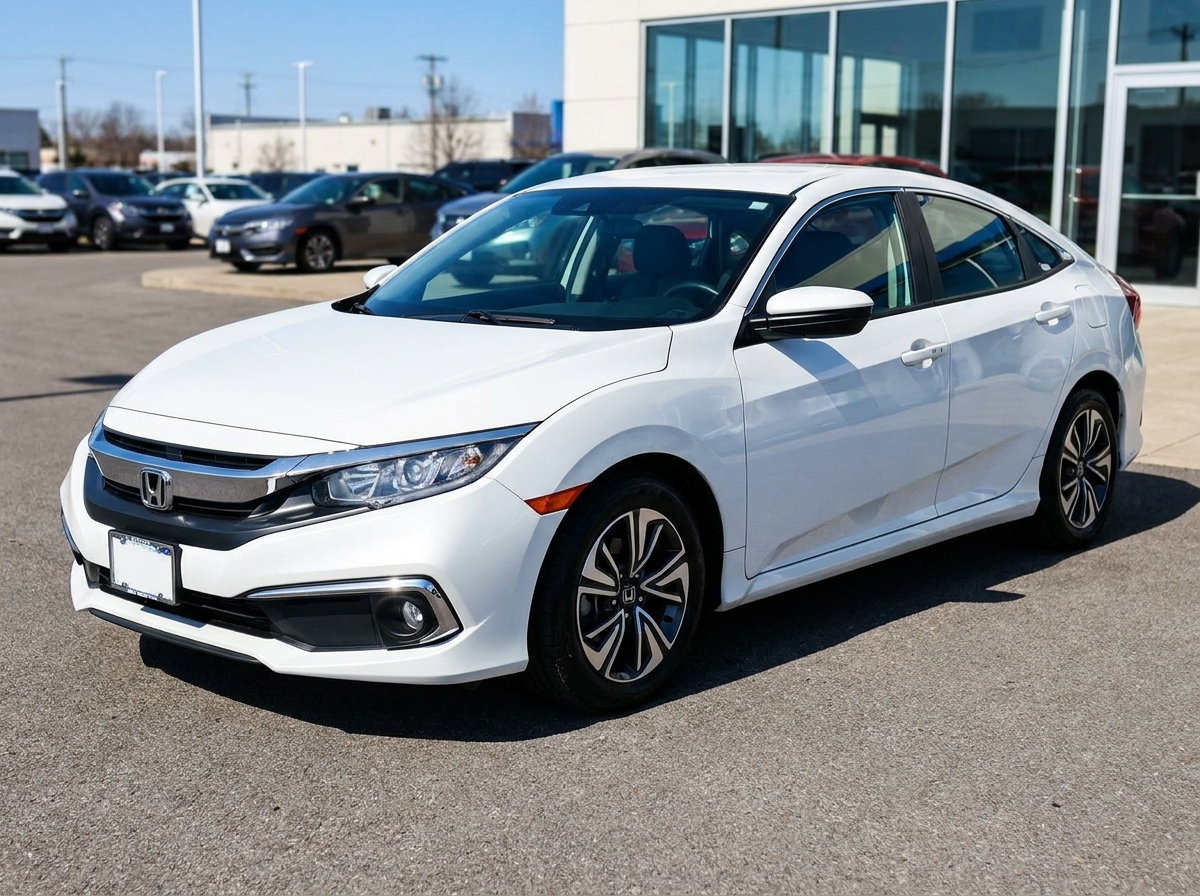
Vehicle: 2019 Honda Civic LX, 60,000 miles, clean title, light cosmetic issues Buyer pool: people shopping for $14,000-$15,500 OTD Civics Copart winning bid scenario: identical for all three states Target profit: $1,500 Transport: $400 Reconditioning: $700
Scenario A: Texas (6.25% state tax, no local on vehicles)
- Buyer max OTD: $15,200
- Sales tax on resale: $15,200 × 6.25% / 1.0625 = $894
- Resale anchor (the price you list at): $15,200 − $894 − ~$108 (title/reg) = ~$14,198
- Budget for "auction (bid + fees)" = $14,198 − $400 − $700 − $1,500 = $11,598
- Max bid (calculator output): ~$10,200
Scenario B: California (8.5% combined effective tax)
- Buyer max OTD: $15,200
- Sales tax on resale: $15,200 × 8.5% / 1.085 = $1,190
- Resale anchor: $15,200 − $1,190 − ~$100 = ~$13,910
- Budget for "auction (bid + fees)" = $13,910 − $400 − $700 − $1,500 = $11,310
- Max bid: ~$9,940
Scenario C: Oregon (0% sales tax)
- Buyer max OTD: $15,200
- Sales tax on resale: $0
- Resale anchor: $15,200 − ~$200 (slightly higher title/reg in OR) = ~$15,000
- Budget for "auction (bid + fees)" = $15,000 − $400 − $700 − $1,500 = $12,400
- Max bid: ~$11,000
The summary
| State | Max Safe Bid |
|---|---|
| Texas | $10,200 |
| California | $9,940 |
| Oregon | $11,000 |
The Oregon flipper can bid $1,060 more than the California flipper and still hit the same profit target on the same car for the same buyer-OTD budget.
What This Means in Practice
Three actionable conclusions:
1. Operate where the math is friendlier
Flippers in low-tax states have a structural cost advantage when competing against the same auction pool. If you can choose where to operate, this matters.
2. Adjust max bid per-deal by your state's tax rate
Use the Vehicle Sales Tax Calculator to get your state's effective rate, then plug it into the Copart Fee Calculator's state input. The Max Safe Bid output automatically reflects local tax.
3. Do not chase auctions where competitors have a tax advantage
If you see a Copart price climbing past your max bid, the winner might be from a lower-tax state with better max-bid math. Walk away — that buyer has different economics than yours.
See your state-adjusted max bid in seconds.
Open the calculatorBeyond Sales Tax: Other DMV Fees
Sales tax is the biggest line item but not the only one. Other state-specific costs that affect buyer OTD:
Title transfer fee
Ranges $5-$150 by state. Small in dollars but visible to the buyer.
Registration
Varies $25-$300+. A buyer in California pays significantly more in registration than a buyer in Texas, which compresses their OTD budget for the actual vehicle.
Dealer doc fee (if buyer goes to a dealer)
Not applicable to private-party flips. But buyers comparing your car against dealer inventory have the dealer's $300-$999 doc fee in mind. Your private-party listing is implicitly $300-$999 more attractive than the equivalent dealer listing at the same price.
Emissions / safety inspection
Some states require inspection at registration. Cost $10-$50, plus the buyer's time. Small but real.
How To Communicate This To Buyers
When pricing a flip listing, two tactics that lift your effective ceiling:
1. Show OTD in your listing copy
"$14,000 — that's about $15,000 OTD in TX with title and registration. Compare to a $14,000 dealer car at $15,800 OTD with doc fees and add-ons."
This frames your private-party listing favorably against dealer alternatives. Buyers see the comparison.
2. Include an OTD breakdown for your state
A simple line at the bottom of the listing: "TX buyers: roughly $15,070 OTD ($14,000 + $875 sales tax + $108 title/reg/HUT)." Removes mental friction. Buyers who otherwise would have walked because the math felt opaque now have it spelled out.
The State-Specific Calculator Workflow
For flippers operating in a single state, the workflow is:
- Bookmark your state's tax page: e.g.,
/tools/vehicle-sales-tax-calculator/[your-state] - Know your effective rate by heart
- Set the state input in the Copart Fee Calculator once
- Run max-bid math on every Copart/IAAI lot before bidding
For flippers across multiple states, the workflow adds a step: identify which state you would resell in (typically your home state or the auction state) and use that state's rate. Different states for purchase vs resale add registration friction; default to selling in your home state unless you have a specific arbitrage advantage.
A Final Worked Example: High-Tax State Flipper
Operating in California (8.5% effective tax) Target vehicle: 2018 Toyota Camry, clean title, light damage Realistic CA resale: $14,200 (median sold price for the model/year/condition in your ZIP)
Max-bid math:
- Buyer pays roughly $15,407 OTD (8.5% tax on $14,200)
- Your asking price ceiling: $14,200
- Sales tax on resale (collected by buyer at DMV): $1,207
- Transport: $400
- Reconditioning: $1,200
- Target profit: $1,800
- Budget for "bid + Copart fees": $14,200 − $1,207 − $400 − $1,200 − $1,800 = $9,593
- Max safe bid (calculator output): ~$8,300
Now compare to a Texas flipper looking at the same Copart lot:
- TX resale: comparable, $14,000 (slightly lower because TX is a bigger competitive market)
- Sales tax on resale: $875
- Same transport, repairs, profit assumptions
- Budget: $14,000 − $875 − $400 − $1,200 − $1,800 = $9,725
- Max safe bid: ~$8,500
The Texas flipper can outbid you by $200 on every comparable Copart deal. Over 20 deals a year, that is $4,000 in lost auction-win opportunities — assuming you do not adjust by walking away from contested deals where the math obviously favors lower-tax-state buyers.
Bottom Line
Taxes do not just affect personal car buyers. They flow through every step of the flipper's math via the buyer's OTD constraint. A 2-3 percentage point sales tax differential between states translates to $200-$400 in max-bid capacity on a $10,000 winning bid — meaningful margin in a competitive auction.
Plug your state into the Copart Fee Calculator for state-adjusted max-bid output. Verify your resale anchor with CarFlipIQ's local asking prices. Walk away from auctions where the math favors lower-tax-state competitors.
State-aware max-bid math, free.
CarFlipIQ pairs the Copart Fee Calculator with state-by-state tax data and local resale comps. Stop bidding blind.
Frequently Asked Questions
How do taxes and fees affect my max auction bid?
Every dollar of tax, title, transport, and buyer fee comes straight out of your bid ceiling. On a typical flip they can consume 25-30% of the gap between auction price and resale - ignore them and you overbid.
Should I include sales tax in my max bid math?
Yes. Even though the auction doesn't collect it, you pay it at registration, so it's a real cost against your margin. Subtract it before setting your ceiling.
What's the biggest fee people forget?
State sales tax and transport. Both are invisible at the moment you bid and both are large enough to turn a planned profit into a loss.
How we get these numbers
Market figures come from LocalIQ™, CarFlipIQ's index of asking prices on local used-car listings. We report medians rather than averages, so a few outlier listings can't drag the number, and a model only appears once it has at least 10 listings behind it. Asking prices tell you what the market is asking, not what a car will sell for — treat them as your resale ceiling.
Check the resale before you bid
Look up any year, make and model against LocalIQ™ asking prices in your market. 5 free car analyses, no credit card.