Salvage Title vs. Clean Title: Is the Rebuild Arbitrage Worth It?
Quick answer
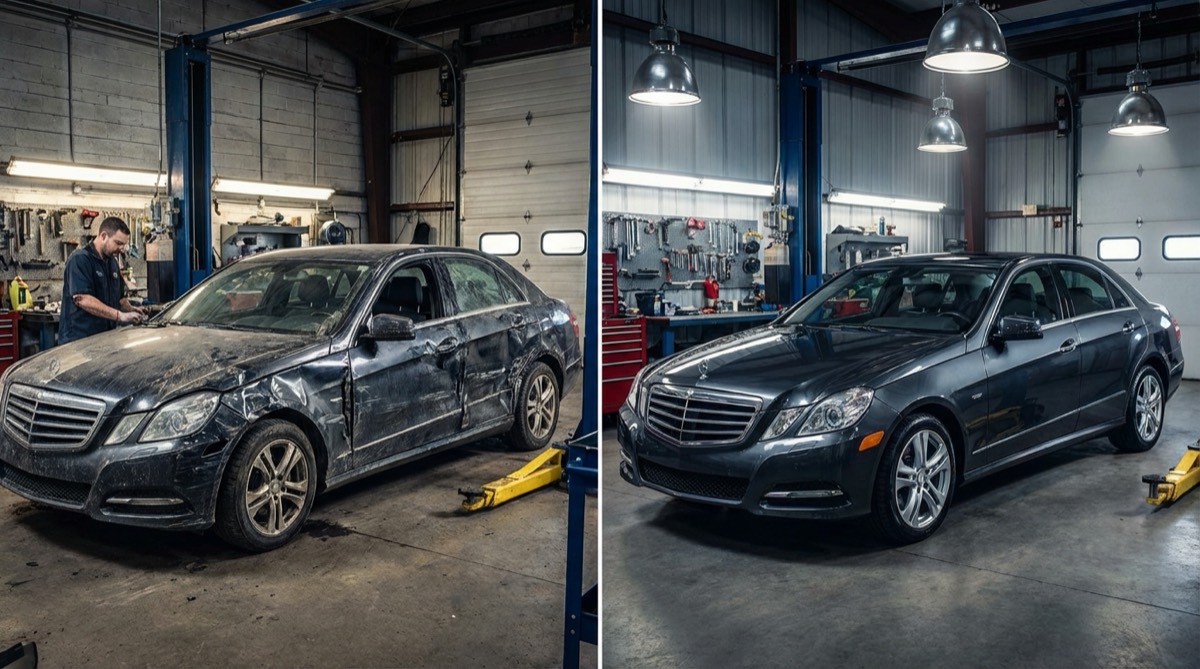
Salvage-title flips offer a bigger discount (30–50% off clean) but carry more risk and sell 1.5–3x slower; clean titles flip faster with fewer surprises. The salvage arbitrage only pays if you can repair cheaply and price the permanent title discount in.
In this article (6 sections)
Salvage title vehicles look like incredible deals — and sometimes they are. A 2021 Toyota Camry that books for $22,000 clean can be purchased at Copart or IAAI for $7,000–$10,000 salvage. After $4,000 in repairs, you might net $6,000–$8,000 per flip.
But the math is not always that clean. Rebuilt title discounts vary by model and market. Repair costs have real variance. Some states make rebuilt title registration expensive or slow. And selling a rebuilt-title vehicle takes longer in most markets than selling the same vehicle clean.
This guide gives you the real math on salvage vs. clean title arbitrage — which models make sense, which ones do not, and the decision framework professional buyers use before bidding on any salvage lot.
See retail values for any vehicle before you bid.
Try CarFlipIQ FreeLocalIQ™ market snapshot
What top flip candidates are asking right now
| Model | Listings | Median asking price |
|---|---|---|
| GMC Sierra 1500 | 523 | $29,995 |
| Chevrolet Silverado 1500 | 1,367 | $25,000 |
| Toyota Tacoma | 1,164 | $27,516 |
| Ford F-150 | 2,592 | $23,995 |
| Ram 1500 | 992 | $22,900 |
| Ford Mustang | 571 | $20,995 |
| Jeep Wrangler | 548 | $25,089 |
| Chevrolet 1500 | 539 | $20,900 |
LocalIQ™ asking-price median · 8,296 listings · updated every 6 hours. National, last 8 model years; asking price is your resale ceiling, not a promised sale price.
How Salvage Title Arbitrage Works
The basic mechanic:
- Buy a damaged vehicle at salvage auction (Copart or IAAI) at a fraction of clean retail value
- Repair the vehicle to a roadworthy standard
- Pass your state's rebuilt title inspection
- Resell with a rebuilt/reconstructed title at a discount to clean retail
The profit lives in the spread between your total cost (acquisition + repairs + fees + transport) and the rebuilt title retail value in your market.
The critical variable: rebuilt title discount. In most markets, a rebuilt-title vehicle sells for 20-35% below the equivalent clean-title vehicle. That discount varies by model, market, and the extent of the original damage (buyers can see the damage category on Carfax).
Rebuilt Title Discount by Vehicle Type
Not all vehicles lose equal value with a salvage history. Here is what we observe in our market data:
| Vehicle Type | Typical Rebuilt Title Discount |
|---|---|
| Common sedans (Camry, Civic, Accord) | 15–25% below clean |
| Popular SUVs (CR-V, RAV4, Wrangler) | 18–28% below clean |
| Trucks (F-150, Silverado, Tacoma) | 15–22% below clean |
| Luxury vehicles (BMW, Mercedes) | 30–45% below clean |
| Exotic/rare vehicles | 40–60% below clean |
| Flood damage history | 35–50% below clean (regardless of title status) |
Trucks and common sedans hold rebuilt value better than luxury vehicles because:
- The buyer pool is larger (more buyers are willing to accept rebuilt titles on practical vehicles)
- Parts and repair quality are more predictable and verifiable
- Common models have better documentation and more experienced rebuild shops
Luxury vehicles suffer the largest rebuilt discounts because buyers are more risk-averse about mechanical complexity, repair quality documentation, and long-term reliability after a significant collision.
The Numbers: Three Salvage Flip Examples
Example 1: 2021 Toyota Camry SE — Front-End Collision
This is the textbook salvage flip. Common model, abundant parts, predictable repair profile, strong buyer demand even with rebuilt title.
2021 Toyota Camry SE — Salvage Flip Math
That $3,650 margin is real — but notice it requires accurate estimates on every input. If the airbag replacement costs $1,200 more than anticipated (common when additional sensors are damaged), your margin drops to $2,450. Still profitable, but the buffer is thin.
Example 2: 2020 Ford F-150 XLT — Side Impact Damage
Trucks often produce the best salvage margins because the rebuilt title discount is smaller relative to the clean retail value gap.
2020 Ford F-150 XLT 4x4 — Salvage Flip Math
The F-150 salvage margin is larger in absolute dollars — $5,420 — but required $22,000 in total capital and significant repair complexity. Frame checks are mandatory on side-impact vehicles, and any structural findings can derail the deal entirely.
Example 3: 2019 BMW 5 Series — Front End Damage
This one illustrates when salvage arbitrage does not work.
2019 BMW 540i — Why This Salvage Does Not Work
The BMW salvage math breaks on two fronts: parts cost 3-5x domestic equivalents, and the rebuilt title discount is much steeper for luxury vehicles. A $2,000 surprise — additional airbag sensor damage, hidden wiring harness issue, coolant system damage — turns a marginal deal into a loss.
The rule: do not attempt salvage rebuilds on European luxury vehicles unless you have direct access to OEM parts at wholesale prices and specialized labor at below-market rates.
What Makes a Salvage Lot Worth Bidding On
Damage Type Matters More Than Price
The damage category is the primary filter. Here is how each category affects rebuild math:
Best for flipping:
- Front-end collision (bumper, hood, airbags) — predictable repair scope
- Rear-end collision (bumper, trunk lid) — often the cheapest repair category
- Minor dents, hail damage — cosmetic only, fastest rebuild
Manageable with expertise:
- Side impact — requires frame check, door/panel replacement
- Theft recovery — often mechanically intact, cosmetic damage only
Avoid unless you specialize:
- Flood damage — wiring harness, electronic modules, rust accelerates invisibly
- Fire damage — wiring replacement alone often exceeds vehicle value
- Rollover — structural integrity cannot be verified without specialist inspection
- "All over" damage — unpredictable scope, high cost variance
Model-Specific Repair Cost Intelligence
Before bidding on any lot, you need a repair estimate — not a guess. For common models, this is achievable with a 30-minute research session:
- Call your body shop and describe the damage
- Check RockAuto and OEM sources for part availability and cost
- Estimate paint labor (1.5–2x parts cost is a rough rule for body work)
- Add 20% contingency for hidden damage not visible in auction photos
For uncommon models or damage types you have not rebuilt before, budget 25-30% contingency instead of 20%.
CarFlipIQ Salvage Check Tool
Elite plan members can run instant salvage analysis on any lot — see local retail value, estimated rebuilt title discount, and max bid calculation that accounts for your repair estimate.
See Elite plan features →Rebuilt Title Resale: What Buyers Look For
Understanding the buyer's perspective on rebuilt titles helps you price and market rebuilt vehicles more effectively.
Buyers want documentation. Before-and-after photos of the repair, receipts from licensed body shops, and the rebuilt title inspection certificate all reduce buyer anxiety. A rebuilt-title vehicle with thorough documentation sells faster and closer to asking price than one with no repair records.
Disclosure is non-negotiable. Every state requires disclosure of salvage history. Attempting to conceal it is fraud. Beyond the legal risk, Carfax and AutoCheck report salvage brand history — any buyer who runs a report (and savvy buyers always do) will find it.
Pricing strategy for rebuilt titles: List at the rebuilt-title retail price (clean price minus the local discount), not at clean retail. Buyers researching rebuilt-title vehicles know the discount exists and will negotiate aggressively if you list at clean-title pricing.
Where to sell rebuilt-title vehicles: Private sale platforms (Craigslist, OfferUp) and local market listings reach buyers who are actively seeking rebuilt-title deals. Dealer lots rarely want rebuilt inventory. Auction resale at Copart or IAAI is always an option but usually yields lower prices than retail.
The Decision Framework: Should You Bid on This Lot?
Run through these five questions before bidding on any salvage lot:
1. What is the local retail value (clean title)? Use CarFlipIQ to check actual comparable listings in your market — not KBB. This is your starting number.
2. What is the estimated rebuilt title discount in your market? Varies by model and market. For common sedans, assume 20-25%. For trucks, 15-20%. For luxury, 30-40%.
3. What is your realistic repair estimate? Get a rough estimate from your body shop. Add a 20% contingency buffer.
4. What are your all-in acquisition costs? Auction fees + transport + title inspection. For IAAI or Copart lots, this typically runs $1,000–$1,500 on a mid-range purchase.
5. Does the math work?
Rebuilt Retail − Total Investment > Target Profit
If the answer is no — or "maybe if nothing goes wrong" — pass on the lot. There will always be another vehicle.
Know Your Retail Number Before You Bid on Any Salvage Lot
CarFlipIQ shows you local market retail values for clean and rebuilt title vehicles. Calculate your real max bid before the auction opens. 5 free car analyses — no credit card required.
Frequently Asked Questions
Is salvage title flipping more profitable than clean title?
The per-car discount is bigger (30-50% off), but so is the risk and the time to sell. Clean titles flip faster with less surprise. Salvage wins only if you can repair cheaply and price the permanent discount in.
Is rebuilding a salvage car worth the arbitrage?
Sometimes - a well-documented repair can move a car from the 30-50% salvage discount up to the 20-40% rebuilt band, capturing the spread. But budget honestly for repairs and slower resale before you commit.
Why do salvage flips look profitable but fail?
Hidden damage balloons the repair budget, and branded-title cars sit far longer, trapping your capital. A margin that takes 120 days to realize is a worse annual return than a thin one that flips in 20.
How we get these numbers
Market figures come from LocalIQ™, CarFlipIQ's index of asking prices on local used-car listings. We report medians rather than averages, so a few outlier listings can't drag the number, and a model only appears once it has at least 10 listings behind it. Asking prices tell you what the market is asking, not what a car will sell for — treat them as your resale ceiling.
Copart fees + local resale prices by city
Check the resale before you bid
Look up any year, make and model against LocalIQ™ asking prices in your market. 5 free car analyses, no credit card.