Why Salvage Flips Look Profitable but Fail (Five Hidden Costs)
In this article (9 sections)
- Hidden Cost #1: Reconditioning Always Runs Over
- Hidden Cost #2: Days-on-Market Is Worse Than You Assume
- Hidden Cost #3: Insurance Friction Loses Deals
- Hidden Cost #4: Financing Friction Cuts Buyer Pool
- Hidden Cost #5: The Quality Discount Compounds
- How to Avoid Each Trap
- When Salvage Flips DO Work
- A Brutal Worked Example
- Bottom Line
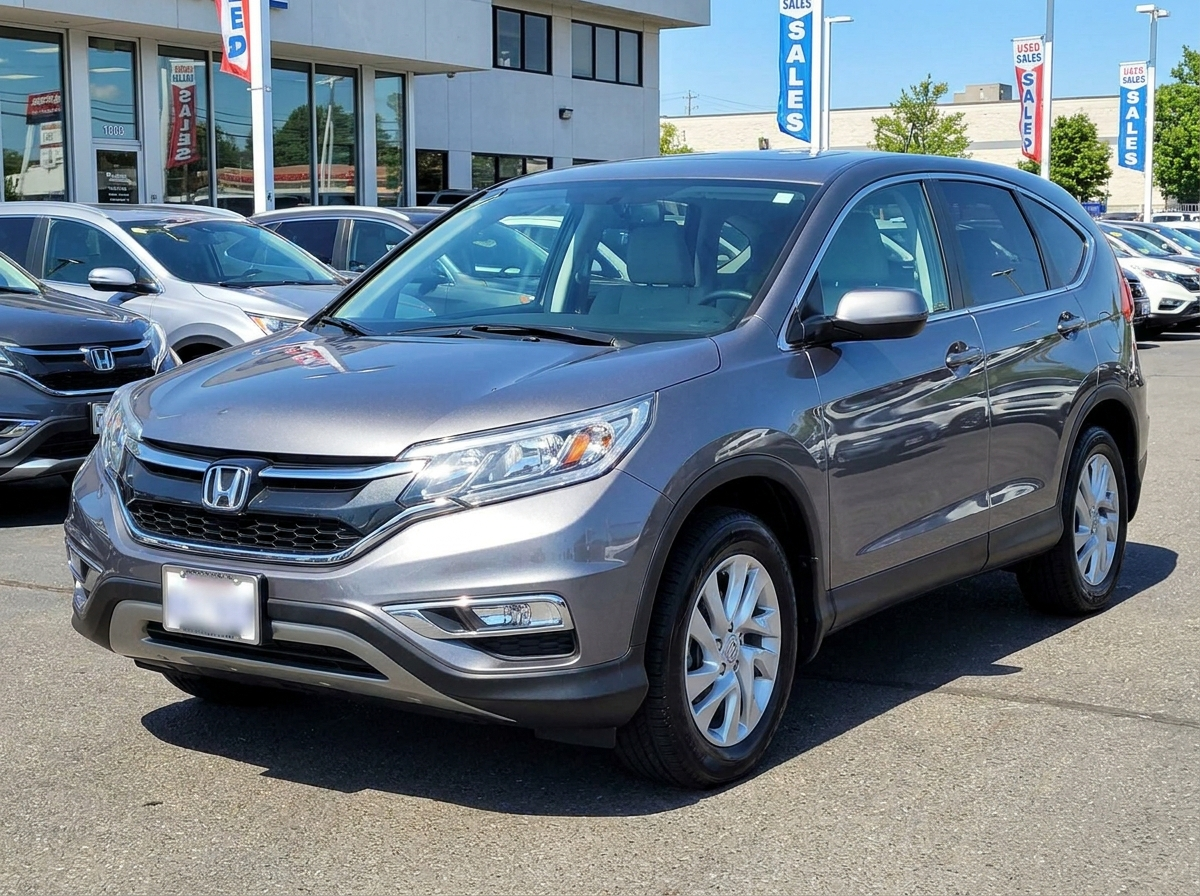
Look at any Copart or IAAI lot summary and the math screams "deal." A 2019 Camry sold for $4,200. Clean retail is $15,800. Margin looks like $10,000+ before any work. This is the trap that pulls new flippers into salvage. Most lose money.
Five hidden costs explain the gap between the spreadsheet and the bank account.
LocalIQ™ market snapshot
What top flip candidates are asking right now
| Model | Listings | Median asking price |
|---|---|---|
| GMC Sierra 1500 | 523 | $29,995 |
| Chevrolet Silverado 1500 | 1,367 | $25,000 |
| Toyota Tacoma | 1,164 | $27,516 |
| Ford F-150 | 2,592 | $23,995 |
| Ram 1500 | 992 | $22,900 |
| Ford Mustang | 571 | $20,995 |
| Jeep Wrangler | 548 | $25,089 |
| Chevrolet 1500 | 539 | $20,900 |
LocalIQ™ asking-price median · 8,296 listings · updated every 6 hours. National, last 8 model years; asking price is your resale ceiling, not a promised sale price.
Hidden Cost #1: Reconditioning Always Runs Over
The number you put in your spreadsheet is wrong. Not by 10%. By 30-60%.
The reasons:
Visible damage is the beginning, not the end
A front-end collision photo shows the bumper, hood, headlight, and grille. What it does not show: bent radiator support, cracked AC condenser, damaged airbag clock spring, broken parking sensor, snapped windshield washer reservoir, internal door panel damage. Each adds $50-$500 to your bill.
Hidden mechanical damage
Cars that took impact often have:
- Bent control arms or tie rods
- Cracked engine mounts
- Damaged transmission cooler lines
- Stretched timing chains (in severe rear-end hits)
- Compressed exhaust components
A full pre-purchase mechanical inspection catches some of this. Most salvage flippers skip it because Copart cars are often inoperable and not at a shop yet. The bill arrives later.
Wiring and electronics
Modern cars have 50+ electronic control units. Collision damage can short, deform, or disconnect any of them. Diagnosing intermittent electrical faults eats hours.
The fix: pad your reconditioning estimate by 25-50%. If you think it needs $1,500 in work, budget $2,250. If your margin works at the padded number, the deal is real. If it only works at the optimistic number, walk.
Hidden Cost #2: Days-on-Market Is Worse Than You Assume
Rebuilt-title cars sit on the market 1.5x-3x longer than clean-title equivalents. Most flippers either do not know this or refuse to model it.
The math: a $1,500 profit on a 14-day flip is a great return. A $1,500 profit on a 75-day flip with $9,000 of capital tied up is a mediocre return.
Annualized:
- 14-day flip, $1,500 profit, $9,000 capital = 433% APR equivalent
- 75-day flip, $1,500 profit, $9,000 capital = 81% APR equivalent
Both look profitable on a per-car basis. One actually grows your business.
CarFlipIQ tracks days-on-market by title brand and ZIP. Check yours before bidding. See cars that look profitable but sit too long.
Hidden Cost #3: Insurance Friction Loses Deals
You finish the rebuild. The car looks great. A buyer wants it. They call their insurer for a quote. Their insurer declines collision coverage on a rebuilt title. The buyer walks.
This happens more often than new salvage flippers expect, especially with mainstream insurers (State Farm, Geico, Progressive). The buyer who would have paid your asking price now goes to a clean-title equivalent, and you cycle back to the buyer pool that accepts liability-only.
That buyer pool exists. It is smaller. It pays less. Sometimes by $1,000-$2,500 less.
The fix: in your local market research, identify which insurers will cover rebuilt titles. Pre-empt the objection in your listing copy: "Several local insurers (X, Y, Z) write full coverage on rebuilt titles — call before assuming." This shrinks the friction.
Hidden Cost #4: Financing Friction Cuts Buyer Pool
Same dynamic as insurance, different channel. A buyer wants to finance. Their bank declines rebuilt titles. They either pay cash (smaller buyer pool, lower offers) or walk.
Major banks (Wells Fargo, Chase, BofA) almost universally decline branded titles. OEM lenders (Toyota Financial, Honda Financial) decline. Credit unions and used-car-focused lenders (Westlake, Capital One Auto for some inventory) sometimes accept with worse terms.
The effective buyer pool for a rebuilt-title car is roughly 40-60% the size of the clean-title buyer pool in the same price range. Days-on-market reflects this.
Hidden Cost #5: The Quality Discount Compounds
Buyers who accept rebuilt titles tend to be cost-conscious. They are not paying premium prices to overlook the brand. They want a discount AND quality assurance.
This creates a quality discount that compounds:
- Buyer expects 25-30% off clean retail just for the title brand
- Buyer then negotiates an additional 5-10% because "rebuilt" makes them nervous
- Buyer then asks for repair documentation, paint thickness gauges, and frame inspection results — which take time you are not getting paid for
Result: your "31% off clean retail" target becomes "38-40% off clean retail" by the time the deal closes. That extra 8 percentage points often eats the entire margin.
Check days-on-market for branded titles in your market.
Analyze 5 Cars FreeHow to Avoid Each Trap
For each hidden cost, a specific mitigation:
Cost #1 (reconditioning overrun)
- Pad estimates by 25-50%
- Build a relationship with a body shop that gives you accurate-not-optimistic quotes
- Avoid heavy-damage / flood / fire lots until you have 10+ flips of experience
Cost #2 (slow days-on-market)
- Check local DOM data before bidding
- Operate in high-acceptance markets (TX, FL, GA, AZ, mountain west)
- Avoid aspirational vehicles where buyers care about brand prestige
Cost #3 (insurance friction)
- Identify local insurers willing to write coverage on rebuilt titles
- Disclose the workable insurer list in your listing copy
- Accept that some buyers will walk over this
Cost #4 (financing friction)
- Price your inventory to clear the cash-buyer market
- Identify local credit unions willing to finance rebuilt titles
- Avoid pricing assuming financing-buyer offers
Cost #5 (quality discount compounding)
- Document the rebuild thoroughly — photos, receipts, inspection paperwork
- Price competitively for the branded segment from the start, don't try to recover margin via negotiation
- Sell quickly so storage doesn't compound the discount
When Salvage Flips DO Work
Despite all five hidden costs, some flippers make salvage their entire business model and profit consistently. They share specific traits:
- In-house repair capability — body shop, paint booth, or strong partner relationships at sub-retail rates
- Volume-driven business model — 10-20+ flips per month, where individual deal variance averages out
- Strong local market — high-acceptance state, established branded-title buyer base
- Disciplined acquisition — never bid above the math, walk from 80% of evaluated lots
For these operators, salvage is steady money. For the casual flipper trying to make it work without these structural advantages, the hidden costs win.
A Brutal Worked Example
Same Camry from the intro:
- 2019 Camry SE, moderate front-end damage, sold at Copart for $4,200
- Spreadsheet math: $4,200 + $1,500 repair + $700 fees = $6,400 cost. Resells at $14,500 clean retail target = $8,100 profit. Looks amazing.
Reality math:
- Copart fees: $989 (more than $700 estimate)
- Transport: $400
- Reconditioning: $2,500 (front-end is worse than photos showed)
- Rebuilt inspection + fees: $250
- Storage (delayed pickup): $90
- Landed cost: $8,429
Sales tax: paid by buyer at registration, but reduces buyer's price tolerance Asking price: $11,500 (28% off clean retail because rebuilt) Days-on-market: 45 days actual (vs 14-day clean Camry baseline) Final selling price after negotiation: $10,700
Real profit: $2,271 over 45 days. That is roughly an 18% return on a 6-week cycle — about 156% APR equivalent on $8,429 capital. Still profitable, but a fifth of what the spreadsheet predicted.
Now imagine the same scenario but you misjudged repair cost by another $1,000 (very common). Profit becomes $1,271. The deal is still positive but barely worth the risk.
Bottom Line
Salvage flips look profitable because the headline math is real. The actual margin is much smaller, and a fraction of estimated margin gets eaten by five hidden costs: reconditioning overrun, slow days-on-market, insurance friction, financing friction, and the compounding quality discount.
The flippers who profit consistently model all five before bidding. They use the salvage value calculator to set expectations, local DOM data to confirm velocity, and conservative repair budgets to avoid surprise.
Walk from 80% of the lots that look profitable. The 20% you take should be ones where the math survives all five hidden costs and still wins.
Model the full math before you bid.
CarFlipIQ pairs free calculators with local branded-title asking prices and DOM. Stop losing on salvage.
Frequently Asked Questions
Why do salvage flips fail even when the math looks good?
Two reasons: hidden structural or flood damage that balloons the repair budget, and slow resale - salvage/rebuilt cars sit 1.5-3x longer, so your capital is trapped even if the per-car margin looks fine.
Are salvage cars worth flipping for beginners?
Rarely, unless you have repair skills or a body shop. Without them you're competing on the same listings against rebuilt-title and clean-title sellers, and the repair surprises wipe thin margins.
How slow do salvage cars actually sell?
Typically 2-3x the days-on-market of a comparable clean-title car. Check the real local sell-speed before bidding - a 'great margin' that takes 120 days to realize is a worse annual return than a thin one that flips in 20.
How we get these numbers
Market figures come from LocalIQ™, CarFlipIQ's index of asking prices on local used-car listings. We report medians rather than averages, so a few outlier listings can't drag the number, and a model only appears once it has at least 10 listings behind it. Asking prices tell you what the market is asking, not what a car will sell for — treat them as your resale ceiling.
Copart fees + local resale prices by city
Check the resale before you bid
Look up any year, make and model against LocalIQ™ asking prices in your market. 5 free car analyses, no credit card.