IAAI vs Copart: Which Auction Is Better for Car Flippers?
Quick answer
Neither IAAI nor Copart wins outright — both auction mostly insurance total-loss cars with branded titles. IAAI's internet-bid fee caps lower ($139 vs $279) but Copart's buyer-fee tiers differ, so the cheaper option depends on the exact lot. Compare the specific car's all-in cost and local resale.
In this article (8 sections)
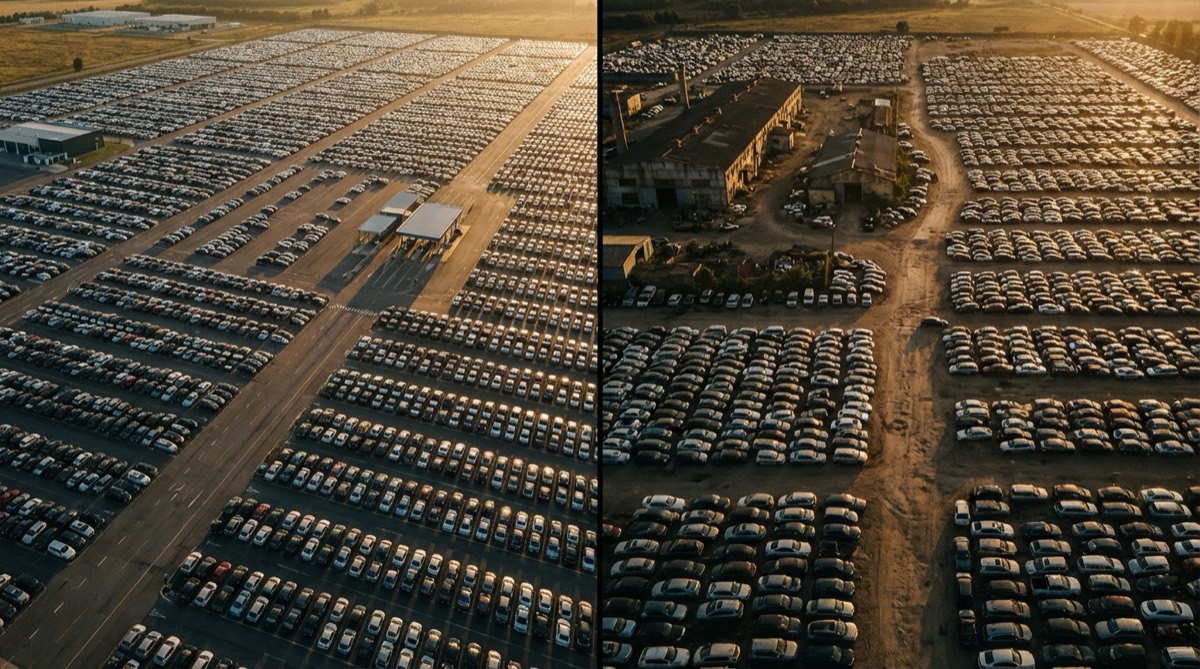
IAAI and Copart together handle the majority of insurance total-loss vehicles in North America. Between the two platforms, tens of thousands of vehicles go to auction every week — and for car flippers, knowing which platform to source from (and when to use both) can mean the difference between a profitable operation and chasing deals that never pan out.
This comparison breaks down both platforms across the factors that actually matter for profitability: fee structures, vehicle inventory quality, condition reports, buyer requirements, and geographic coverage.
Know your max bid before you bid on either platform.
Try CarFlipIQ FreeLocalIQ™ market snapshot
What top flip candidates are asking right now
| Model | Listings | Median asking price |
|---|---|---|
| GMC Sierra 1500 | 523 | $29,995 |
| Chevrolet Silverado 1500 | 1,367 | $25,000 |
| Toyota Tacoma | 1,164 | $27,516 |
| Ford F-150 | 2,592 | $23,995 |
| Ram 1500 | 992 | $22,900 |
| Ford Mustang | 571 | $20,995 |
| Jeep Wrangler | 548 | $25,089 |
| Chevrolet 1500 | 539 | $20,900 |
LocalIQ™ asking-price median · 8,296 listings · updated every 6 hours. National, last 8 model years; asking price is your resale ceiling, not a promised sale price.
IAAI (IAA Insurance Auto Auctions) — Overview
IAA, now officially rebranded as IAA, Inc. (formerly Insurance Auto Auctions), is the second-largest salvage auto auction in North America. With over 200 locations across the US, Canada, and international markets, it processes millions of vehicles annually for insurance carriers, rental companies, and fleet operators.
What IAAI Offers
Vehicle mix. IAAI's inventory skews heavily toward insurance total-losses. The platform processes clean-title vehicles with minor damage, salvage-title vehicles from collisions, flood damage, theft recovery, and catastrophic losses. That variety makes IAAI useful for buyers with different strategies — from cosmetic-only flips to full rebuilds.
BidBuy and virtual bidding. IAAI's online bidding platform supports real-time virtual bidding on live auctions. Preliminary bids can be placed before auction day, and buy-now pricing is available on select lots. The interface has improved significantly in recent years, though experienced users still find Copart's platform slightly more polished.
CRs (Condition Reports). IAAI provides condition reports on eligible vehicles, but coverage is uneven. Enhanced vehicles receive detailed reports including structural scans and fluid checks. Standard lots may have limited documentation. Always verify what report level applies before bidding sight-unseen.
Buyer requirements. To bid on IAAI, you need either a dealer license, a salvage license, or a broker relationship. Public buyers can access IAAI through licensed third-party services, but fees will be higher than bidding directly.
Fee structure. IAAI charges a buyer fee that scales with hammer price, plus a virtual bid fee for online participation. Storage, title handling, and environment fees are additional. We break down IAAI fees in full in our IAAI fees guide.
Copart — Overview
Copart is the largest salvage auto auction in the world, operating over 200 facilities in the US and additional locations in Canada, UK, Germany, Brazil, and other markets. It processes more total-loss vehicles than any other platform and is the default choice for most insurance carriers.
What Copart Offers
Volume and inventory depth. Copart's sheer scale is its biggest advantage. On any given day, hundreds of thousands of vehicles are listed across its platform. That volume means more opportunities to find specific year/make/model combinations, more competitive pricing across the board, and faster lane turnover.
CashSpin and virtual bidding. Copart's CRs (Condition Reports) are its gold standard. The platform has invested heavily in standardized condition grading, and high-value lots often include undercarriage inspections, interior scans, and mechanical assessments. The consistency of Copart CRs is generally superior to IAAI for sight-unseen buying confidence.
Clean title inventory. Copart's "clean" lane includes vehicles with no salvage branding — minor damage below the insurance company's total-loss threshold. These lots often offer the best margin potential because buyers get clean title with damaged-vehicle pricing.
Buyer requirements. Copart requires a dealer license, a salvage license, or a third-party broker license to bid directly. The registration process is more streamlined than IAAI for licensed buyers.
Fee structure. Copart's fee schedule is detailed in our Copart tips guide. The short version: expect 15-25% on top of the hammer price across buyer premium, gate, VB3, title processing, and environmental fees.
IAAI vs Copart: Side-by-Side
| Category | IAAI | Copart |
|---|---|---|
| US Locations | 200+ | 200+ |
| Inventory Volume | Large | Largest in North America |
| Condition Reports | Variable (Enhanced for select lots) | Standardized, more consistent |
| Online Bidding | BidBuy (real-time + preliminary) | CRs + Virtual bidding |
| Clean Title Lots | Yes | Yes (separate clean lane) |
| Flood / Hail / Fire | Strong coverage | Strong coverage |
| Buyer Premium | Tiered (scales with price) | Tiered (scales with price) |
| Broker/Public Access | Yes (higher fees) | Yes (higher fees) |
| Mobile App | Yes | Yes |
| International Buyers | Yes | Yes (larger international footprint) |
Where IAAI Has the Edge
Better pricing on mid-range lots
Anecdotally — and confirmed by experienced buyers — IAAI often sees less bidding competition than Copart on vehicles in the $3,000 to $12,000 range. Copart attracts more international buyers who push prices up on common models. If your target range is domestically-oriented, you may find better margins on IAAI lots simply because there are fewer bidders.
Certain damage categories
IAAI frequently has stronger representation in certain damage categories: minor dents, hail, vandalism. These lots can be particularly attractive for flippers because the damage is cosmetic-only and the title is often clean or unaffected.
Geographic coverage in specific markets
In some states, IAAI has more active facilities than Copart. This matters because transport cost directly affects your margin. If IAAI has a yard 40 miles from your shop and the nearest Copart is 150 miles away, that transport difference alone changes the math significantly.
Where Copart Has the Edge
Better condition reports for sight-unseen buying
If you are buying without physically inspecting the vehicle, Copart's standardized condition reports give you more confidence. Their enhanced inspection program (for vehicles above a certain price tier) covers structural integrity, fluid checks, and interior scans. IAAI's CRs are improving but not yet as consistent.
Sheer inventory volume
Copart simply lists more vehicles. When you need a specific model — say, a 2019 Honda Accord Sport with front-end damage — Copart is more likely to have multiple lots available simultaneously. That selection lets you be selective instead of forcing a decision on the only available unit.
Chrome extension compatibility
The CarFlipIQ Chrome extension works on both Copart and IAAI lot pages, overlaying local retail pricing data to help you calculate your max bid. However, Copart's lot page structure is more consistent, which means the extension's data overlays tend to be more reliable on Copart than on IAAI.
The Profitability Question: Which Platform Delivers Better Returns?
The honest answer is that it depends on your target vehicle type, your local market, and your willingness to research both platforms before each purchase.
Example: 2020 Toyota Camry SE — Front End Damage
The example above is directionally accurate based on typical observed bidding patterns. IAAI often comes in slightly lower on common models due to less bidding competition, particularly from international buyers. But individual lots vary — the only way to know for a specific vehicle is to check both platforms before the auction date.
Know Your Retail Number Before You Bid
The CarFlipIQ Chrome extension overlays real local market retail pricing directly on IAAI and Copart lot pages. See your profit potential before the auction starts — no tab-switching required.
See how it works →See it on the lot page
The CarFlipIQ extension drops a live pricing card right on the Copart, IAAI & Manheim lot page — local resale, max bid, and profit, without leaving the auction.
Fee Comparison: IAAI vs Copart
Both platforms have complex fee structures that add 15-25% to your hammer price. Here is a high-level comparison:
| Fee Type | IAAI | Copart |
|---|---|---|
| Buyer Premium | Tiered by price (up to 17.5%) | Tiered by price (up to 17%) |
| Internet Bid Fee | $99 (varies by state) | $129 (VB3 fee) |
| Gate/Yard Fee | $0-$89 depending on vehicle size | $79 |
| Title Fee | $58-$108 | $80-$120 |
| Storage | Accumulates after pickup window | $30-$50/day after 3 business days |
| Environmental | $10-$15 | $10-$15 |
The practical difference in total fees between the two platforms is usually small (often under $100 on a mid-range purchase). The bigger driver of profitability is the winning bid price — and that comes down to bidding strategy, not platform choice.
For a complete IAAI fee breakdown with a worked example, see our IAAI fees guide.
Which Platform Should You Use?
Start with both. There is no reason to limit yourself to one platform. Register on both, monitor lots across both, and bid where the deal makes sense. Many professional flippers actively compare the same vehicle model across IAAI and Copart before committing to a lane.
Use IAAI when:
- You are targeting the $3,000-$12,000 range where IAAI sees less bidding competition
- IAAI has a facility significantly closer to your shop (transport savings matter)
- You find a specific lot with better documentation or damage profile than the Copart equivalent
Use Copart when:
- You need a specific model and want more selection
- You are buying sight-unseen and need consistent condition reports
- You are targeting higher-value lots where Copart's enhanced inspections provide more confidence
Validation is non-negotiable on either platform. Before bidding on any lot — IAAI or Copart — you need to know the actual retail selling price in your specific market. National valuation tools will mislead you. CarFlipIQ's local market data shows what similar vehicles are actually listed for in your ZIP code, so your max bid is based on real numbers, not national averages that may differ by thousands of dollars.
Source Smarter from IAAI and Copart
Get real local retail pricing for any vehicle before you bid. CarFlipIQ covers 2M+ listings across 50 states so you always know your max bid. No credit card required.
Frequently Asked Questions
Is IAAI or Copart better for flippers?
Neither wins outright - it depends on inventory near you and the exact lot's all-in cost. Both are mostly insurance total-loss cars with branded titles. Compare the specific car's fees and local resale, not the platform in general.
What's the difference between IAAI and Copart?
Both auction insurance total-loss vehicles, but fee structures differ (IAAI uses a service fee and a lower internet-bid cap; Copart uses a gate fee). Inventory mix and yard locations also vary by region.
Which auction has lower fees, IAAI or Copart?
It varies by bid tier. IAAI's internet-bid fee caps lower, but Copart's buyer-fee tiers can win on certain bids. The only honest answer is to run your exact lot through both fee calculators.
How we get these numbers
Market figures come from LocalIQ™, CarFlipIQ's index of asking prices on local used-car listings. We report medians rather than averages, so a few outlier listings can't drag the number, and a model only appears once it has at least 10 listings behind it. Asking prices tell you what the market is asking, not what a car will sell for — treat them as your resale ceiling.
IAAI fees + local resale prices by city
Check the resale before you bid
Look up any year, make and model against LocalIQ™ asking prices in your market. 5 free car analyses, no credit card.