Copart Fees Explained: Every Charge on Your Invoice, Decoded

Quick answer
Every Copart invoice stacks six charges: a tiered buyer fee, internet bid fee (caps at $279), $95 gate, $15 environmental, ~$20 title, and storage after 3 free days. Together they add about 20% to a typical winning bid — and Copart never collects your state sales tax, which you pay at registration.
In this article (10 sections)
Copart's invoice is one of the more confusing documents in the used-car business. You bid $4,000. The invoice says you owe $4,914. Where did the extra $914 come from?
This guide explains every fee Copart charges, in plain English, with concrete examples. If you want the calculator instead of the explanation, jump straight to the Copart Fee Calculator.
LocalIQ™ market snapshot
What top flip candidates are asking right now
| Model | Listings | Median asking price |
|---|---|---|
| GMC Sierra 1500 | 523 | $29,995 |
| Chevrolet Silverado 1500 | 1,367 | $25,000 |
| Toyota Tacoma | 1,164 | $27,516 |
| Ford F-150 | 2,592 | $23,995 |
| Ram 1500 | 992 | $22,900 |
| Ford Mustang | 571 | $20,995 |
| Jeep Wrangler | 548 | $25,089 |
| Chevrolet 1500 | 539 | $20,900 |
LocalIQ™ asking-price median · 8,296 listings · updated every 6 hours. National, last 8 model years; asking price is your resale ceiling, not a promised sale price.
The Mental Model
Copart is not the seller. Copart is the auction house. They take a fee from both the seller (the insurance company, fleet operator, or donor) and the buyer (you). Your invoice covers their cut, plus a handful of operational and regulatory pass-throughs.
Every fee on your invoice falls into one of four buckets:
- Auction fees — how Copart makes money on your transaction
- Operational fees — what it costs Copart to physically move your car
- Regulatory fees — government-mandated handling charges
- Storage fees — charged only if you leave the car too long
Understanding which bucket each fee belongs to makes the total feel less arbitrary.
Auction Fees (The Big Two)
Buyer Fee
This is Copart's primary revenue line. It is tiered — a flat dollar amount per bid range, climbing rapidly until ~$10,000, at which point it transitions to a flat 7.5% of the winning bid.
The schedule is designed to extract maximum margin from the middle of the bid distribution, where most retail buyers play. A $500 bid pays an 16% buyer fee ($80). A $5,000 bid pays a 15% buyer fee ($750). A $25,000 bid pays a 7.5% buyer fee ($1,875).
If you flip a lot of vehicles, the buyer fee is the single number to optimize. Becoming a Premier member (lower fees) requires either a licensed dealer registration or a substantial transaction history with Copart.
Internet Bid Fee
Charged on every winning bid placed online. Tiered, but with a hard ceiling at $279 for any bid $8,000 or above.
In the early Copart era, this was meant to cover the cost of running online auctions vs in-person. Now it is essentially universal — no one bids in person — and the fee functions as additional auction revenue.
Operational Fees
Gate Fee — $95
You pay this when you (or your transporter) picks the vehicle up from the yard. It covers the cost of the Copart staff who pull the vehicle out, do the paperwork, and verify your release.
Some buyers assume the gate fee is negotiable. It is not. The only way to avoid it is to never pick the car up — which means the car stays at Copart accruing storage fees, which is worse.
Title / Documentation Fee — ~$20
Varies by state. Copart prepares the title transfer paperwork and submits it. The fee covers their administrative cost. In states with complex title processing (Massachusetts, New York, parts of California), this fee can run $40-$60.
Regulatory Fees
Environmental Fee — $15
Federal and state regulations require auction yards to handle hazardous materials (fuel, oil, refrigerant, airbag chemicals) according to specific protocols. The $15 flat fee covers the per-vehicle compliance cost. It is non-negotiable and applies to every winning bid regardless of vehicle type.
Storage Fees
First 3 Days: Free
Copart includes three free storage days after the sale. Use them. Schedule transport as early as possible.
Day 4 and Beyond: ~$30/day
After the free window, storage runs around $30/day. Some specialty yards charge more (up to $60/day for indoor storage or oversized vehicles). The clock keeps running until pickup.
This is the most avoidable Copart fee. A 14-day pickup delay adds $330 to your cost basis for no benefit. Always book transport before the auction closes.
A Worked Example: $4,000 Winning Bid
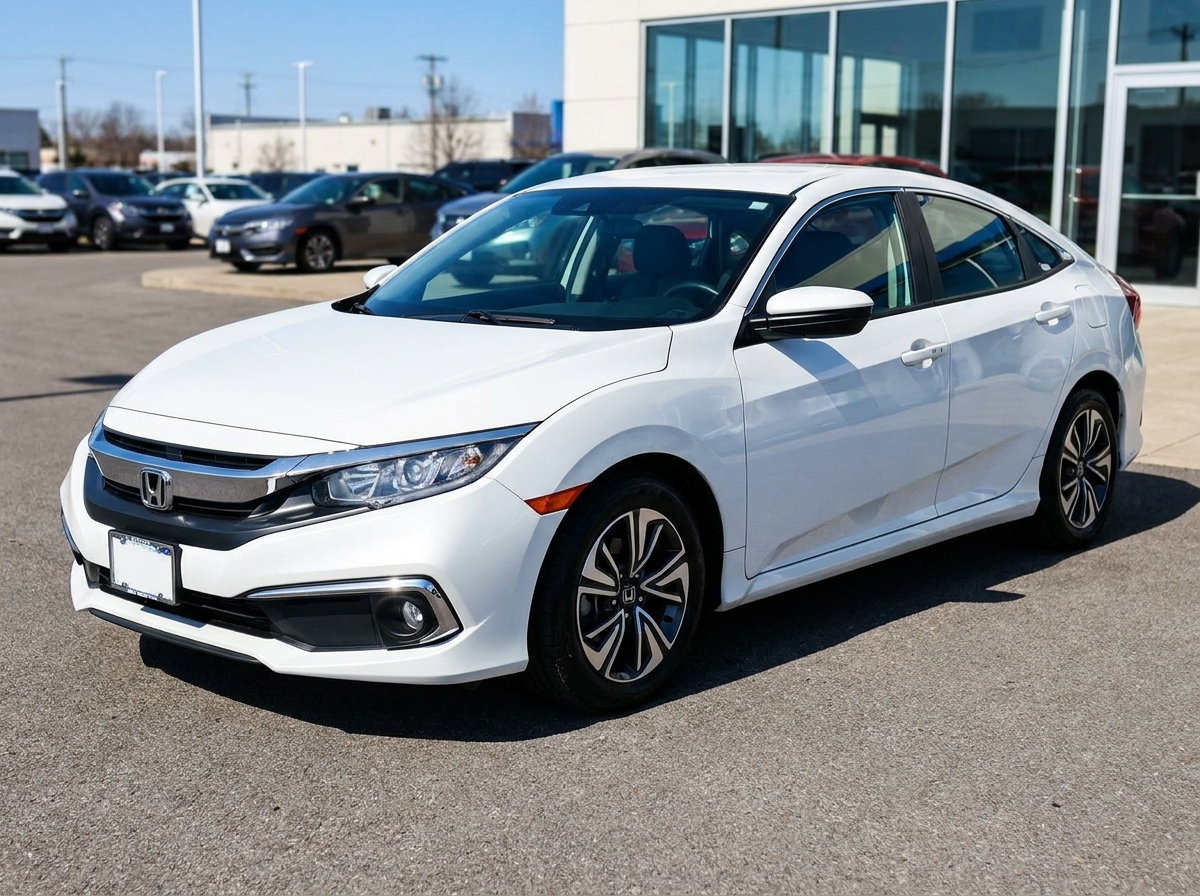
Suppose you win a 2018 Honda Civic for $4,000 at Copart. Here is what the invoice looks like:
| Fee | Amount |
|---|---|
| Winning bid | $4,000 |
| Buyer fee (tier: $4K-$4.5K) | $650 |
| Internet bid fee (tier: $4K-$6K) | $179 |
| Gate fee | $95 |
| Environmental fee | $15 |
| Title/doc fee | $20 |
| Storage (3 days free, assume 0 extra) | $0 |
| Total invoice | $4,959 |
The car costs $4,959 to extract from Copart. That is before transport ($300-$800), state sales tax (varies, often $200-$300 on a $4K car), DMV registration (~$50-$100), and any reconditioning.
Realistic landed cost on this car: roughly $5,800-$6,500.
See it on the lot page
The CarFlipIQ extension drops a live pricing card right on the Copart, IAAI & Manheim lot page — local resale, max bid, and profit, without leaving the auction.
The Fees That Are NOT on Your Copart Invoice
This is where most new buyers get burned. Copart does not collect:
- State sales tax on the vehicle purchase. You pay this at your DMV when you register. See used car sales tax by state.
- Transport from the yard to your location. Variable, often $500-$1,500.
- DMV registration in your state.
- Insurance for transit and storage.
- Reconditioning — the largest unknown for most lots.
A buyer who only models Copart fees and ignores everything else will systematically underestimate true cost by 15%-30%.
Model your true landed cost before you bid.
Open the calculatorHow Premier Membership Changes the Math
Copart's Premier membership tier reduces buyer fees by roughly 30%-50% across the schedule. To qualify, you typically need:
- A licensed motor vehicle dealer registration in your state, AND
- Active transaction history with Copart (specific thresholds vary)
For a flipper doing 1-2 cars a month, Standard membership is fine. For anyone doing 10+ cars a month, the dealer license and Premier status pay for themselves in saved fees within a quarter.
See how to flip cars without a dealer license for the gray-area trade-offs.
How Copart Fees Compare to IAAI and Manheim
Each major auction has a different fee philosophy:
- Copart — high buyer fees, high internet bid fee, $95 gate, 3 free storage days.
- IAAI — slightly lower buyer fees, lower internet bid fee ($139 cap vs $279), $79 service fee replaces gate fee, 2 free storage days. See the IAAI Fee Calculator.
- Manheim / ADESA — dealer-only auctions, different fee structures, generally lower fees but require dealer license. See Manheim vs ADESA.
Most retail and small-dealer buyers split time between Copart and IAAI. The fee differences are real but rarely the deciding factor — vehicle inventory, location, and title quality matter more.
Bottom Line
Copart's fee structure is fully knowable. You can model your exact invoice before placing a bid. The number that surprises new buyers is not any single fee — it is the cumulative effect of six small line items stacking on top of a four-figure winning bid.
Plug your target bid into the Copart Fee Calculator and the numbers stop being a surprise.
Don't bid blind. Know your local resale value first.
CarFlipIQ tracks Facebook Marketplace listings across all 50 states. See exactly what comparable cars sell for in your ZIP.
Frequently Asked Questions
What fees does Copart charge?
A buyer fee (tiered by bid amount), an internet/virtual bid fee, a gate fee, an environmental fee, and a title-handling fee - plus storage if you don't pick up promptly. Together they typically add about 20% on top of the hammer price.
How much does Copart add to the final price?
Roughly 20% over the winning bid on a typical car once all fees stack up - more on cheap lots, proportionally less on expensive ones. Run the exact bid through the Copart Fee Calculator to see your real all-in number.
Does Copart charge sales tax?
No - Copart doesn't collect state sales tax. You pay it when you register the car in your home state, so factor it into your max bid separately or it quietly eats your margin.
How we get these numbers
Market figures come from LocalIQ™, CarFlipIQ's index of asking prices on local used-car listings. We report medians rather than averages, so a few outlier listings can't drag the number, and a model only appears once it has at least 10 listings behind it. Asking prices tell you what the market is asking, not what a car will sell for — treat them as your resale ceiling.
Copart fees + local resale prices by city
Check the resale before you bid
Look up any year, make and model against LocalIQ™ asking prices in your market. 5 free car analyses, no credit card.