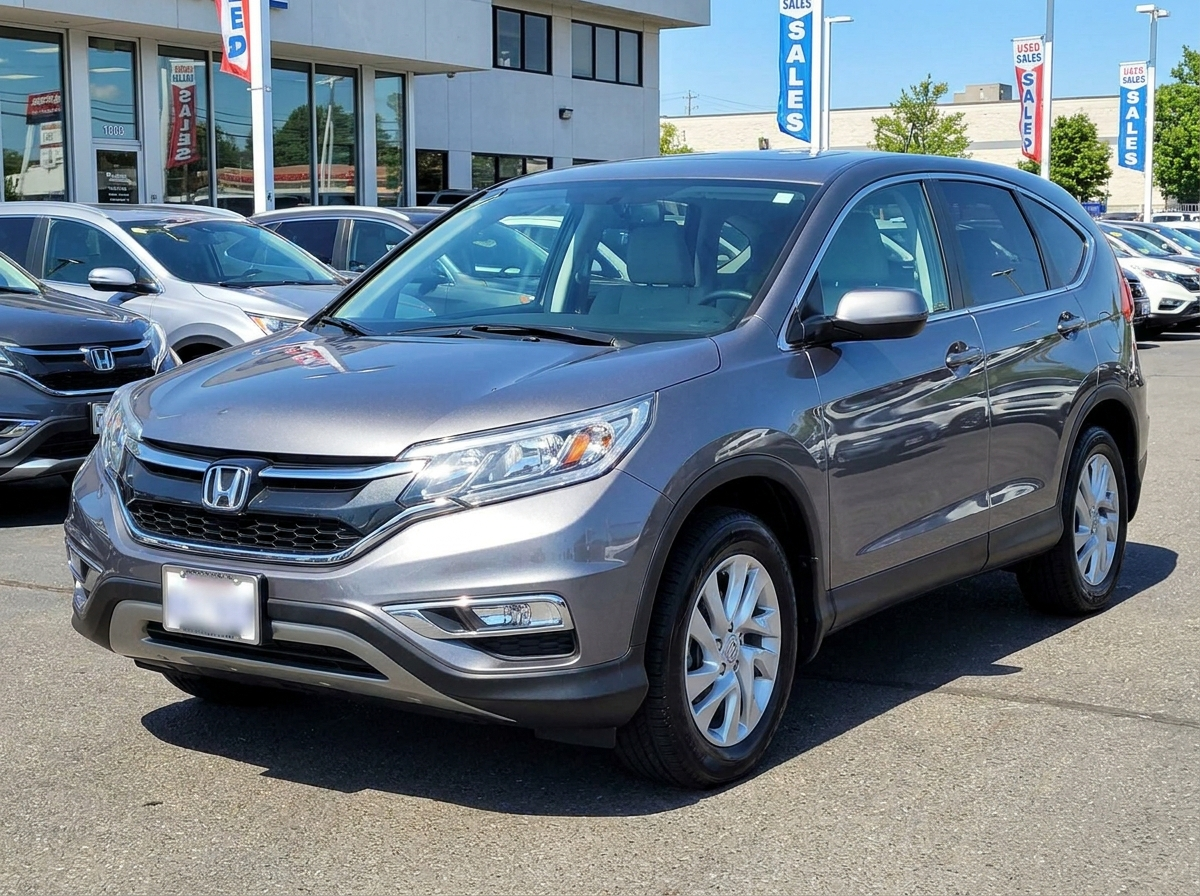
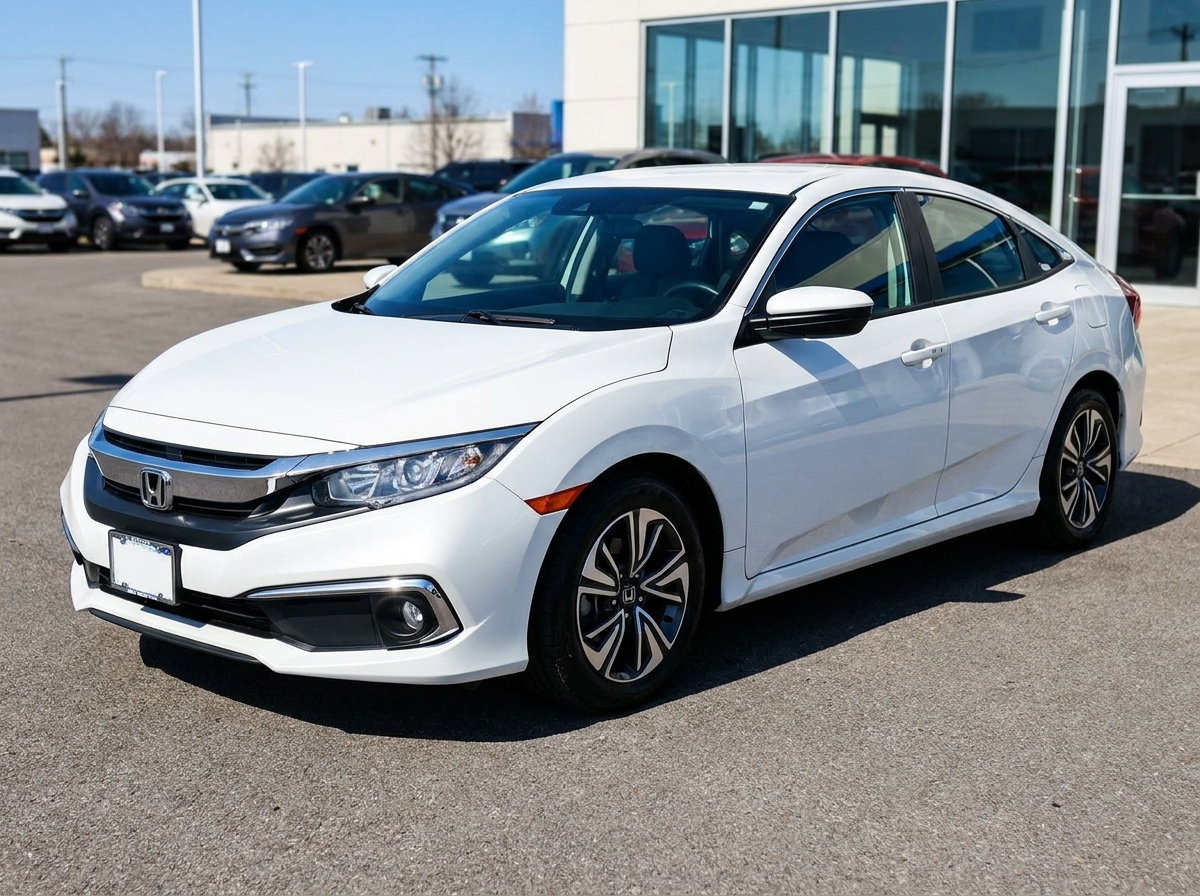
How Much Should You Bid on a Copart Car? The Math That Protects Your Margin

Quick answer
Your max Copart bid = expected local resale − Copart fees (~20%) − transport − repairs − sales tax − your target profit. The number people get wrong is local resale: anchor it to real local listing prices in your ZIP, not a national average, or you'll overbid.
In this article (11 sections)
- The Core Equation
- Step 1: Anchor on Realistic Resale Price
- Step 2: Subtract Reconditioning Honestly
- Step 3: Estimate Transport
- Step 4: Apply Sales Tax
- Step 5: Set Target Profit
- Worked Example
- What to Do If the Auction Goes Past Your Max
- Common Mistakes That Inflate Your Max Bid
- The Local Sell-Speed Variable
- Bottom Line
The single biggest reason flippers lose money at Copart is bidding without doing the math first. You see a car, you have a feel for what it is worth, you push to the next bid increment, and you win — and only then do you discover the deal does not pencil out.
This guide gives you the math. Not a vibe. An actual formula for setting your max bid before the auction closes.
For an interactive version, use the Max Safe Bid mode of the Copart Fee Calculator.
LocalIQ™ market snapshot
What top flip candidates are asking right now
| Model | Listings | Median asking price |
|---|---|---|
| GMC Sierra 1500 | 523 | $29,995 |
| Chevrolet Silverado 1500 | 1,367 | $25,000 |
| Toyota Tacoma | 1,164 | $27,516 |
| Ford F-150 | 2,592 | $23,995 |
| Ram 1500 | 992 | $22,900 |
| Ford Mustang | 571 | $20,995 |
| Jeep Wrangler | 548 | $25,089 |
| Chevrolet 1500 | 539 | $20,900 |
LocalIQ™ asking-price median · 8,296 listings · updated every 6 hours. National, last 8 model years; asking price is your resale ceiling, not a promised sale price.
The Core Equation
Your maximum bid is the largest number that satisfies this inequality:
Bid + Copart fees + Transport + Sales Tax + Reconditioning + Target Profit ≤ Realistic Resale Price
Rearranged:
Max Bid = Realistic Resale Price − (Copart fees on max bid + Transport + Sales Tax + Reconditioning + Target Profit)
The complication: Copart fees themselves depend on the bid (tiered schedule), so this is a recursive equation. You cannot solve it with a single division. You either iterate manually, use a binary-search solver (what our calculator does), or guess high and pray.
Step 1: Anchor on Realistic Resale Price
The most common mistake at this stage: anchoring on a "wish" price. A 2019 Camry might list for $19,000 on a particularly well-detailed AutoTrader ad, but that is not what you will actually get. You will get the median of what comparable cars sold for in your local market within the last 30-60 days.
Realistic resale = median local sold price, NOT the highest local listing price.
Sources of resale data, ranked by usefulness for flippers:
- Local sold listings — what actually moved, in your market, recently. This is gold. CarFlipIQ tracks this across all 50 states. See why local pricing matters.
- Local active listings (median, not max) — what is currently asking. Discount by 5-10% to estimate sold price.
- KBB or Edmunds private-party value — useful as a sanity check, often 10-15% above true sold price. See is KBB accurate.
- National average sold price — too smoothed to be useful for individual transactions.
Step 2: Subtract Reconditioning Honestly
Every Copart car needs work. The question is how much. Categories from cheapest to most expensive:
- Cosmetic only (paint chips, minor scuffs, wheel curb rash): $200-$800
- Body panel replacement (one fender, one quarter panel, hood): $800-$2,500
- Mechanical (brakes, suspension parts, fluids, common wear items): $400-$2,000
- Major mechanical (engine, transmission, AC system): $2,500-$8,000+
- Frame / unibody repair (not all states accept these for re-titling): $3,000-$10,000+
Be conservative. Repair budgets always come in higher than estimated. If you think it needs $1,500 in work, model it at $2,000.
Step 3: Estimate Transport
Transport cost depends on distance, vehicle type, and whether you ship open or enclosed.
- Open carrier, under 300 miles: $300-$600
- Open carrier, 300-800 miles: $600-$1,000
- Open carrier, 800-1,500 miles: $1,000-$1,400
- Enclosed (for high-value, exotic, or pristine vehicles): roughly 2x open
See how to estimate Copart shipping cost.
Step 4: Apply Sales Tax
You pay your state's sales tax at the DMV when you register the car. Tax bases vary:
- Most states tax the purchase price
- Some states (CA, HI, MD, MI, VA) do not give trade-in credit
- A few states (NC, GA) charge a different "highway use tax" or "TAVT" instead
Tax rates range from 0% (NH, MT, OR, DE, AK) to 7.25% statewide (CA), with local additions pushing California's effective rate above 10% in many cities.
Use the Vehicle Sales Tax Calculator for state-specific rates.
Step 5: Set Target Profit
This is where flippers diverge. Two common philosophies:
- Volume play: $800-$1,500 per car, target 4-6 flips per month
- Margin play: $2,500-$5,000 per car, target 1-3 flips per month
Both work. The math is the same — only the target profit input changes. New flippers should err high ($1,500+ minimum) because reality always eats your margin.
Worked Example
Let us run a real scenario.
Vehicle: 2019 Toyota Corolla LE, 65,000 miles, light front-end damage Your market: North Carolina Realistic resale (local sold median): $14,500 Reconditioning estimate: $1,200 Transport: $500 (yard is 350 miles away) Sales tax: 3% NC Highway Use Tax = $435 on the eventual sale Target profit: $1,800
Total deductions from resale: $1,200 + $500 + $435 + $1,800 = $3,935
Budget for "auction (bid + Copart fees)": $14,500 − $3,935 = $10,565
Now solve for the bid where bid + Copart fees ≤ $10,565.
Try $9,000 bid:
- Buyer fee: $1,000
- Internet bid fee: $279
- Gate/env/title: $130
- Total fees: $1,409
- Total Copart cost: $10,409
That fits. Try $9,200:
- Buyer fee: $1,000 (still in the $8K-$10K flat tier)
- Internet bid fee: $279
- Gate/env/title: $130
- Total fees: $1,409
- Total Copart cost: $10,609
That exceeds your budget by $44.
So your max safe bid is $9,150 (the largest bid where Copart fees keep you under the $10,565 ceiling).
The calculator does this binary search instantly — input the resale price, state, transport, repairs, and profit, and it returns the exact max bid.
Skip the manual math. Use the binary-search solver.
Open the Max Bid CalculatorSee it on the lot page
The CarFlipIQ extension drops a live pricing card right on the Copart, IAAI & Manheim lot page — local resale, max bid, and profit, without leaving the auction.
What to Do If the Auction Goes Past Your Max
This is the discipline test. The bid passes your max, the car you wanted is right there, the next bid is only $200 more. Walk away. Always.
The reason: your max bid was built on a profit assumption. Bidding over it means you accepted less profit on a deal where the upside is already capped. Worse, if you do this regularly, you train yourself to chase — and chasers lose money in flipping.
If you keep losing every auction at your max, your max is wrong. Either:
- Your resale estimate is too low (check more recent local comps)
- Your reconditioning estimate is too high (get a sharper repair quote)
- Your target profit is too aggressive for the vehicle class
- You are competing against buyers with different math (Premier members with lower fees, exporters with different resale markets)
Adjust the inputs, not the discipline.
Common Mistakes That Inflate Your Max Bid
Three patterns that ruin flippers' year-end P&L:
- Anchoring on retail asking, not sold price. Resale is what cars actually move at, not the optimistic Craigslist listing.
- Forgetting sales tax. It is invisible at auction but very real at the DMV. A $14K Camry in California adds $1,000+ in tax to your cost basis.
- Underestimating reconditioning. Always pad your repair estimate by 25%. The hidden things — windshield, AC condenser, control arms, ABS module — find you.
The Local Sell-Speed Variable
Even perfect bid math can lose money if the car sits unsold. A Camry might have a 14-day median time-on-market in Texas and 28 days in Oregon. The same target profit produces very different annualized returns depending on velocity.
CarFlipIQ tracks days-on-market by make, model, year, and ZIP. Use it to confirm your target resale is realistic at the speed you need.
See sell-speed for any car in your market.
CarFlipIQ tracks 2M+ listings across all 50 states. Real medians, real DOM, free to start.
Bottom Line
Your max bid is not a feel. It is the solution to a six-variable equation: resale price, reconditioning, transport, tax, profit target, and Copart's tiered fee schedule. Solve it before the auction opens. Walk away when it passes. Adjust your inputs if you keep losing at your max — but never adjust your discipline.
Use the Copart Fee Calculator to do the math in seconds. Use CarFlipIQ's local comps to make sure your resale anchor is real.
Frequently Asked Questions
How do I calculate the max bid on a Copart car?
Start with the car's local resale price, then subtract Copart fees (~20% of the hammer price), transport, repairs, sales tax, and your target profit. What's left is your ceiling. The Max Bid Calculator solves it in one step.
What percentage over my bid will Copart fees add?
On most bids, expect roughly 20% on top of the hammer price once buyer fee, internet bid fee, gate, environmental, and title fees stack up - more on cheap cars, less on expensive ones.
Why do I keep losing money on Copart cars?
Almost always because the resale price was guessed off a national average instead of your local market, or repairs ran over. Price the car against real local comps and pad the repair estimate before you bid.
How we get these numbers
Market figures come from LocalIQ™, CarFlipIQ's index of asking prices on local used-car listings. We report medians rather than averages, so a few outlier listings can't drag the number, and a model only appears once it has at least 10 listings behind it. Asking prices tell you what the market is asking, not what a car will sell for — treat them as your resale ceiling.
Copart fees + local resale prices by city
Check the resale before you bid
Look up any year, make and model against LocalIQ™ asking prices in your market. 5 free car analyses, no credit card.