Is KBB Accurate? Real Data Says No — Here's What to Use Instead

Quick answer
National valuation guides are rough midpoints at best — real local listing prices swing thousands by location and condition, so a single national number routinely misses your local market. Price against real local listing data for the exact year/make/model instead.
In this article (7 sections)
Every day, millions of buyers, sellers, and dealers pull up Kelley Blue Book to answer one question: What is this car actually worth? The answer they get feels authoritative. It comes with a clean interface, a trusted brand, and a number that looks precise down to the dollar.
But here is the problem: that number is often wrong by thousands of dollars.
We know this because we track real asking and exit prices across 2M+ private market vehicle listings spanning all 50 US states and metro areas. When we compared what KBB says a vehicle is worth to real local listing prices, the gap was significant -- and consistent.
LocalIQ™ market snapshot
What top flip candidates are asking right now
| Model | Listings | Median asking price |
|---|---|---|
| GMC Sierra 1500 | 523 | $29,995 |
| Chevrolet Silverado 1500 | 1,367 | $25,000 |
| Toyota Tacoma | 1,164 | $27,516 |
| Ford F-150 | 2,592 | $23,995 |
| Ram 1500 | 992 | $22,900 |
| Ford Mustang | 571 | $20,995 |
| Jeep Wrangler | 548 | $25,089 |
| Chevrolet 1500 | 539 | $20,900 |
LocalIQ™ asking-price median · 8,296 listings · updated every 6 hours. National, last 8 model years; asking price is your resale ceiling, not a promised sale price.
Why KBB Gets It Wrong
Kelley Blue Book relies on national average transaction data, dealer wholesale reports, and broad regional adjustments. That methodology made sense in 2005 when local market data was hard to come by. It does not hold up in 2026.
Here is what national averages miss:
- Local supply and demand imbalances. A 2019 Toyota Camry in Phoenix has completely different demand dynamics than the same car in Minneapolis.
- Regional vehicle preferences. Trucks command premiums in rural Texas that do not exist in Manhattan. Convertibles sell faster in Florida than in Michigan.
- Climate and condition factors. Salt belt vehicles (Ohio, Michigan, Pennsylvania) depreciate faster due to rust. Desert cars retain value because of cleaner undercarriages.
- Dealer density and competition. Markets saturated with dealerships push prices down. Rural areas with fewer options see higher private-sale prices.
- Seasonal demand shifts. 4WD trucks spike in value every October in Colorado but stay flat year-round in Southern California.
KBB attempts to account for some of these factors with ZIP-code adjustments, but those adjustments are based on statistical models, not real local listing data from your specific market.
ZIP-Level Pricing from Real Listings
CarFlipIQ tracks real asking and exit prices at the ZIP code level across all 50 states. Instead of modeled estimates, you see real local listing data for your market.
See your local market data →5 Real-World Examples: KBB vs. Real Local Prices
We pulled five popular models and compared KBB private-party estimates against the median local listing price from our database in specific metro areas. The differences are striking.
Note: KBB estimates retrieved for "Good" condition, private-party value. Local listing prices represent the median from CarFlipIQ tracked listings within the specified metro over the prior 90 days. All figures are illustrative examples based on observed market patterns.
1. 2019 Toyota Camry SE -- Phoenix, AZ
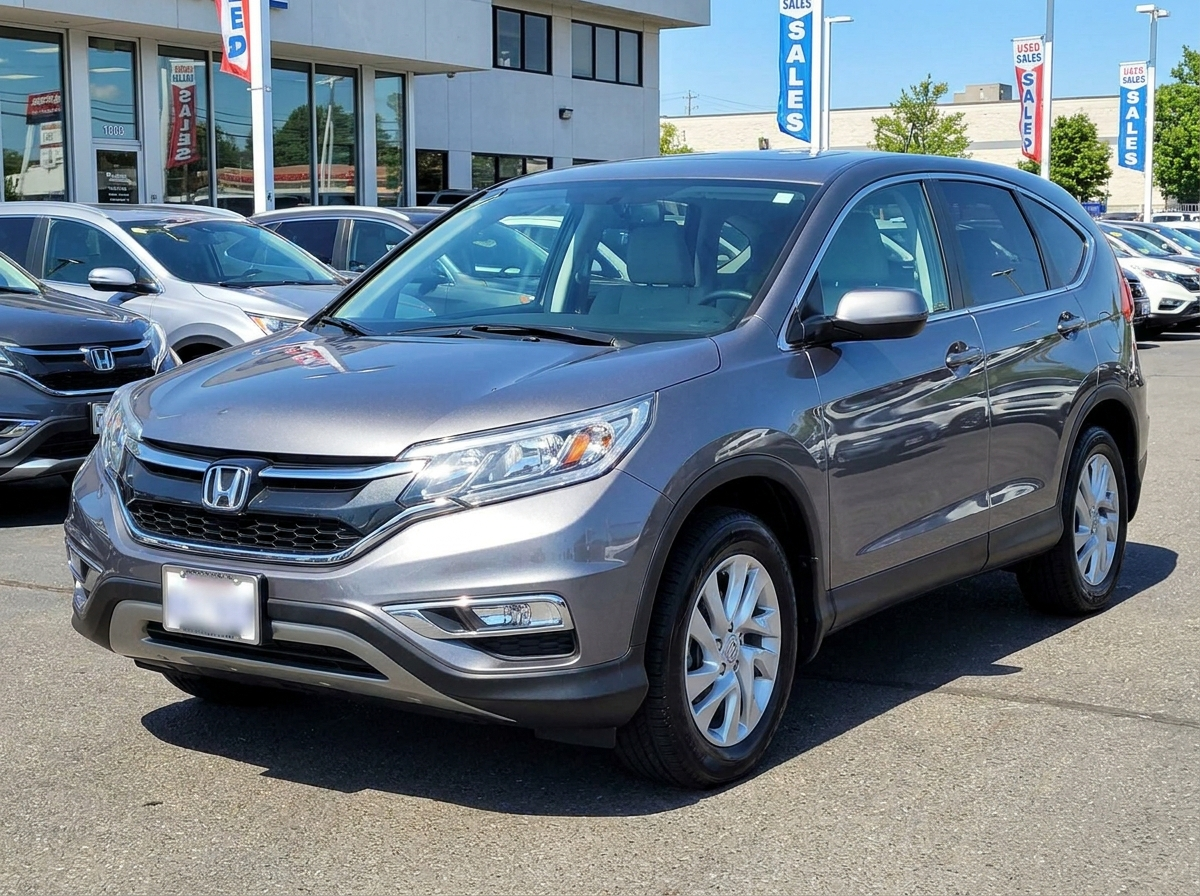
KBB says a 2019 Camry SE with 55,000 miles in "Good" condition is worth around $19,200 for a private-party sale. In the Phoenix metro, the median local listing price is $22,400. That is a $3,200 gap -- and it is not unusual for Camrys in the Southwest, where clean-title sedans hold value exceptionally well due to minimal weather damage.
2019 Toyota Camry SE — Phoenix, AZ (55K mi)
If you are selling, KBB just cost you $3,200. If you are buying, KBB made you think you were getting a fair deal when you were actually overpaying relative to KBB -- but paying market rate.
2. 2020 Honda Civic LX -- Chicago, IL
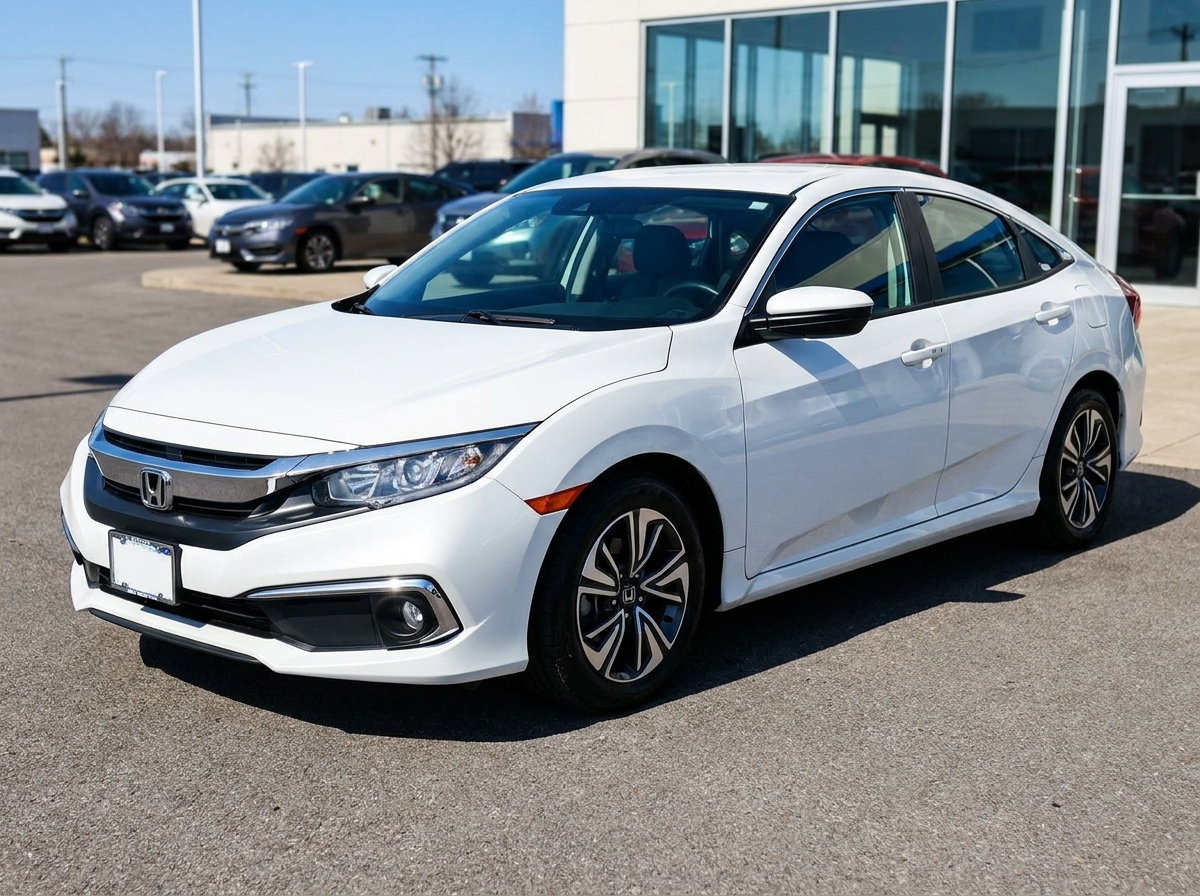
KBB estimates $18,800 for a 2020 Civic LX with 42,000 miles. In the Chicago metro, our data shows a median local listing price of $16,500. The salt belt discount is real -- buyers in the Midwest factor in rust risk, and that pushes Civic prices well below what KBB's national model predicts.
2020 Honda Civic LX — Chicago, IL (42K mi)
3. 2018 Ford F-150 XLT 4x4 -- Houston, TX
Trucks are where KBB's national averaging breaks down the hardest. KBB puts a 2018 F-150 XLT 4x4 with 68,000 miles at $26,100. In Houston and the broader Texas market, where truck inventory is deep and competition between sellers is fierce, the median local listing price lands at $23,800. Sellers listing at KBB prices sit for weeks with no calls.
2018 Ford F-150 XLT 4x4 — Houston, TX (68K mi)
4. 2021 Hyundai Elantra SEL -- Miami, FL
KBB estimates $19,500 for a 2021 Elantra SEL with 35,000 miles. In South Florida, where fuel-efficient sedans are in high demand and inventory turns quickly, the median local listing price is $21,900. Sellers who price at KBB leave $2,400 on the table.
2021 Hyundai Elantra SEL — Miami, FL (35K mi)
5. 2017 BMW 3 Series 330i -- Los Angeles, CA
Luxury vehicles show some of the largest discrepancies. KBB lists a 2017 330i with 72,000 miles at $20,800. In the LA market, where BMW inventory is plentiful and buyers are cautious about out-of-warranty maintenance costs, the median local listing price drops to $16,300. That is a $4,500 gap -- enough to turn a profitable flip into a loss if you bought based on KBB.
2017 BMW 330i — Los Angeles, CA (72K mi)
Stop guessing. See real local listing prices for any vehicle in your ZIP code.
Analyze 5 Cars FreeWhat KBB Is Good For (And Where It Fails)
KBB is not useless. It provides a reasonable national baseline and is fine as a starting point for casual buyers who just want a ballpark. But it fails in three critical scenarios:
-
Flipping and wholesale. If you are buying cars to resell for profit, a $2,000-$5,000 pricing error is the difference between a profitable deal and a loss. You need real local comps, not national estimates.
-
Negotiation leverage. Walking into a private-party negotiation with a KBB printout works until the seller pulls up real local listings showing higher prices. Data from real local listings is far more persuasive.
-
Auction buying. When bidding on Copart or IAAI lots, you need to know the retail value in your specific market after repair costs. KBB does not account for the salvage-to-retail spread in your ZIP code.
What Makes Local Pricing Data Different
The gap between KBB and actual prices comes down to granularity. Here is what local data captures that national averages cannot:
Supply density by market
A 2019 Camry might have 45 active listings in the Dallas metro but only 8 in Boise. That supply difference alone creates a 10-15% price variance that no national model captures.
Seasonal demand patterns
Convertibles and sports cars spike in value every spring in northern states. 4WD trucks and SUVs see price bumps in early fall. These cycles are invisible in annualized national data.
Seller type mix
Markets dominated by dealer listings price differently than markets with mostly private sellers. CarFlipIQ tracks seller type so you can compare apples to apples -- private-party to private-party, dealer to dealer.
Days on market
KBB tells you what a car is "worth." It does not tell you how long it takes to sell at that price. A vehicle priced at KBB value might sit for 60 days in one market and sell in 3 days in another. Knowing days-on-market helps you price to move.
Chrome Extension for Instant Valuations
Install the CarFlipIQ Chrome extension to see real local pricing data overlaid directly on Copart, IAAI, and Manheim auction pages. Know your max bid before you click.
Learn about the extension →How CarFlipIQ Solves the Pricing Problem
We built CarFlipIQ specifically because KBB and similar tools were not giving car flippers, dealers, and wholesalers the data they need. Here is how it works:
Real local listing data, not estimates. Our pricing engine pulls from 2M+ active and off-market listings analyzed across private markets in all 50 states. You see real local asking and exit prices, not what a statistical model predicts.
ZIP-code level granularity. Instead of a single national number, you get pricing data broken down by ZIP code. A 2019 Camry in ZIP 85001 (Phoenix) prices differently than 85701 (Tucson), and our data reflects that.
Proprietary pricing algorithm. Our valuation engine factors in local supply density, days on market, seller type, condition indicators, and seasonal trends. It updates daily as new listings enter the market.
Auction integration. The CarFlipIQ Chrome extension overlays real local retail values directly on Copart and IAAI lot pages, so you can calculate your max bid with real market data instead of KBB guesses.
How to Use Both KBB and Local Data Together
The smartest approach is not to abandon KBB entirely -- it is to use it as a starting point and then validate with local data.
- Pull the KBB estimate to get a national baseline.
- Check CarFlipIQ for the real local listing price in your ZIP code.
- Calculate the local adjustment -- the delta between KBB and local data.
- Factor in condition and mileage using local comps with similar specs.
- Set your price or bid based on real market data, not national averages.
This two-step approach takes less than two minutes and can save you thousands on every transaction.
The Bottom Line
KBB was built for a world without granular local market data. That world no longer exists. When a $2,000-$5,000 pricing error is common across popular models in major metros, relying on national averages is a liability -- whether you are buying, selling, or flipping.
Local pricing data is not a nice-to-have. For anyone transacting more than a few cars a year, it is the difference between making money and leaving it on the table.
CarFlipIQ gives you access to real local listing prices from 2M+ listings across all 50 states, broken down to the ZIP code level. Real market data, not modeled estimates.
See Real Local Prices for Cars in Your Market
Analyze 5 cars free and access real pricing data from 2M+ listings across 50 states. No credit card required.
Frequently Asked Questions
Is Kelley Blue Book accurate?
It's a national estimate, so it's a rough midpoint at best. Real local listing prices swing thousands by location and condition, so a single national number routinely misses your actual local market - which is how flippers overpay.
Why is KBB different from the real selling price?
Because it's a modeled national average, not a reflection of real local listing activity near you. Local supply, demand, and condition move real prices well outside the estimate's range.
What's more accurate than KBB for pricing a car?
Real local listing prices for the exact year/make/model in your area. CarFlipIQ tracks 2M+ real listings analyzed across all 50 states, so you price against real local market data - not a national guess.
How we get these numbers
Market figures come from LocalIQ™, CarFlipIQ's index of asking prices on local used-car listings. We report medians rather than averages, so a few outlier listings can't drag the number, and a model only appears once it has at least 10 listings behind it. Asking prices tell you what the market is asking, not what a car will sell for — treat them as your resale ceiling.
Check the resale before you bid
Look up any year, make and model against LocalIQ™ asking prices in your market. 5 free car analyses, no credit card.