Manheim vs Adesa: Which Auto Auction Is Better for Flippers?
In this article (8 sections)
The wholesale auto auction landscape has shifted dramatically over the past few years. Cox Automotive consolidated its grip on Manheim while KAR Global rebranded and restructured Adesa's operations. For car flippers, dealers, and wholesalers trying to source profitable inventory, the question remains: which platform actually delivers better results?
The answer depends on what you buy, how you buy it, and where you sell. This guide breaks down both platforms so you can pick the right lane -- or use both strategically.
LocalIQ™ market snapshot
What top flip candidates are asking right now
| Model | Listings | Median asking price |
|---|---|---|
| GMC Sierra 1500 | 523 | $29,995 |
| Chevrolet Silverado 1500 | 1,367 | $25,000 |
| Toyota Tacoma | 1,164 | $27,516 |
| Ford F-150 | 2,592 | $23,995 |
| Ram 1500 | 992 | $22,900 |
| Ford Mustang | 571 | $20,995 |
| Jeep Wrangler | 548 | $25,089 |
| Chevrolet 1500 | 539 | $20,900 |
LocalIQ™ asking-price median · 8,296 listings · updated every 6 hours. National, last 8 model years; asking price is your resale ceiling, not a promised sale price.
Manheim: The Industry Giant
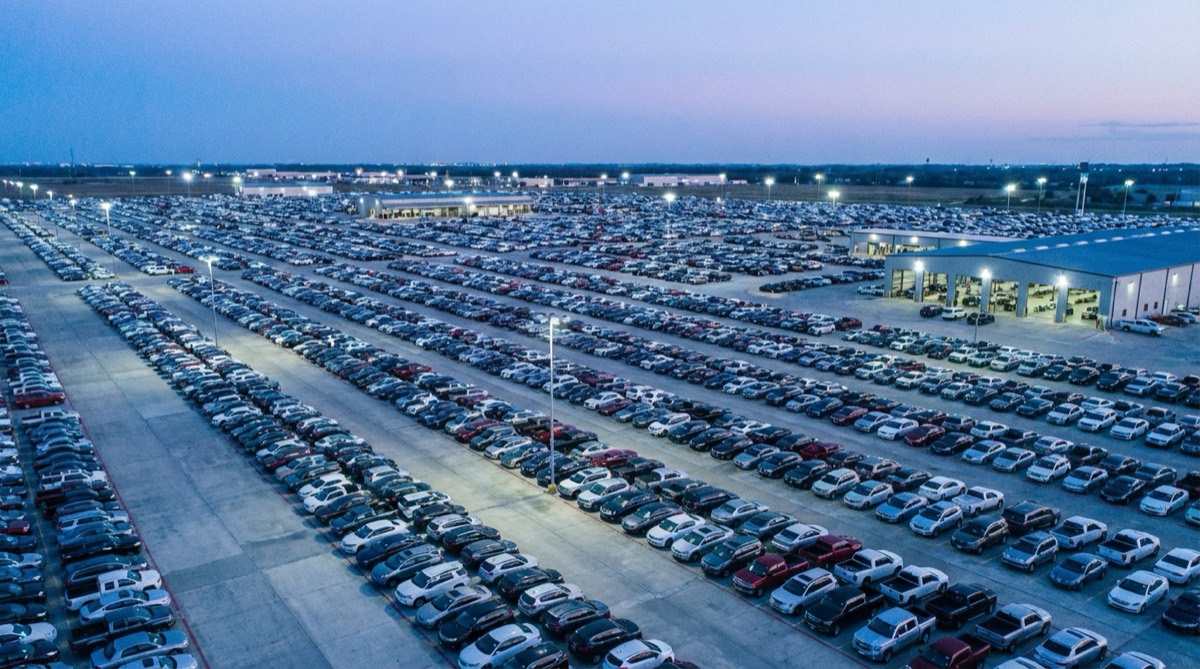
Manheim is the largest wholesale auto auction in North America. With over 70 physical auction locations and a massive digital platform, it handles millions of transactions annually. If you have been in the wholesale game for any length of time, you have almost certainly bought or sold through Manheim.
What Manheim Offers
Scale and selection. Manheim's inventory is unmatched. On any given week, tens of thousands of vehicles run through their lanes -- everything from off-lease sedans and fleet returns to dealer trade-ins and rental car disposals. That volume means more options for niche buyers looking for specific year/make/model combinations.
Simulcast and OVE. Manheim Simulcast lets you bid on live in-lane auctions remotely. OVE (Online Vehicle Exchange) is their 24/7 marketplace for buy-now and offer-based transactions. Between the two, you can source inventory without ever setting foot in a physical auction.
Condition reports. Manheim's CR system is standardized across locations. Reports include a 1-5 scale rating, detailed damage annotations, and often include undercarriage and interior photos. The consistency makes it possible to buy confidently sight-unseen.
Buyer fees. Manheim's fee structure scales with sale price. Expect to pay between $200 and $600 per vehicle in buyer fees depending on the final hammer price. Online purchases through OVE typically carry an additional internet fee. Transportation costs are separate and vary by distance.
Manheim Arbitration
Manheim's arbitration policy gives buyers a window to dispute condition misrepresentation. For most vehicles, you have until the end of the next business day after pickup to file a claim. Green-light vehicles (sold as-is) have more limited arbitration rights. Structural damage and undisclosed frame issues generally qualify for arbitration regardless of sale terms.
Know the retail value before you bid. Check any vehicle against 2M+ local listings.
Analyze 5 Cars FreeAdesa: The Challenger With an Edge
Adesa operates as the second-largest wholesale auto auction network in the US and Canada. After KAR Global's restructuring and the Carvana acquisition of Adesa's US physical auction business, the platform has gone through significant changes. Adesa's digital marketplace continues to operate, and several physical locations remain active under various arrangements.
What Adesa Offers
OptiCount grading. Adesa's proprietary vehicle grading system assigns a numerical score based on condition, mileage, and market factors. Many buyers find OptiCount more intuitive than Manheim's CR scale because it translates directly into expected reconditioning costs. Knowing the likely recon bill before you bid is critical for flipping cars profitably.
Digital platform. Adesa's online marketplace supports live simulcast bidding, timed auctions, and buy-now listings. The interface tends to be cleaner than Manheim's, though inventory volume is lower.
TradeRev integration. Adesa's TradeRev mobile app lets dealers run real-time auctions directly from the dealership lot. For flippers who also sell to dealers, TradeRev can be a useful exit channel for vehicles that do not fit the retail profile.
Buyer fees. Adesa's fee structure is competitive with Manheim. Buyer fees generally range from $175 to $550 depending on sale price and channel. Some promotional events offer reduced fees to attract new bidders.
Adesa Arbitration
Adesa's arbitration policies have historically been similar to Manheim's, with a next-business-day window for most claims. Post-sale inspection periods may vary by location and sale type. Structural and flood damage disclosures are generally enforceable regardless of sale terms.
Side-by-Side Comparison
Here is how the two platforms stack up across the categories that matter most to buyers sourcing inventory for resale.
| Category | Manheim | Adesa |
|---|---|---|
| Inventory Volume | Largest in North America | Second largest, lower volume post-restructuring |
| Physical Locations | 70+ US locations | Reduced footprint, select locations active |
| Digital Platform | Simulcast + OVE (24/7) | Simulcast + timed auctions + TradeRev |
| Buyer Fees | $200-$600 per vehicle | $175-$550 per vehicle |
| Condition Reports | 1-5 CR scale, standardized | OptiCount numerical grading |
| Arbitration Window | Next business day (most vehicles) | Next business day (most vehicles) |
| Fleet/Lease Inventory | Very strong (OEM partnerships) | Moderate, strong in Canadian market |
| Salvage/Damaged | Limited (separate Manheim Specialty) | Limited (not primary focus) |
| Mobile Experience | Manheim app (functional) | TradeRev app (dealer-focused) |
| Registration Difficulty | Requires dealer license or bond | Requires dealer license or bond |
CarFlipIQ Works With Both Platforms
Our Chrome extension overlays real retail pricing data on auction lot pages across Manheim, Copart, and IAAI. Know your max bid and expected profit margin before you click, no matter which auction you source from.
See how the extension works →Which Platform Wins for Your Strategy?
The right auction depends on what you are buying and how you plan to exit. Here is a breakdown by strategy.
Clean Retail Units
Winner: Manheim. If you are buying clean-title, lightly used vehicles to resell at retail, Manheim's inventory depth is hard to beat. Off-lease vehicles and fleet returns from major OEMs flow through Manheim in massive volume. The standardized condition reports reduce the risk of buying a vehicle that needs more reconditioning than expected.
Look for Manheim's dealer-consignment lanes where you can find trade-ins that dealerships do not want to retail themselves. These are often the best margin opportunities for flippers focused on the $8,000-$20,000 retail price bracket.
Salvage and Damaged Vehicles
Winner: Neither -- use Copart or IAAI. Both Manheim and Adesa are wholesale platforms focused on clean-title vehicles. If your strategy involves buying damaged or salvage-title vehicles, repairing them, and reselling with rebuilt titles, Copart and IAAI are purpose-built for that workflow.
Manheim does operate Manheim Specialty for salvage and damaged inventory, but the volume and pricing transparency do not match what you get on Copart or IAAI.
Fleet Vehicles and Rental Returns
Winner: Manheim. Manheim's partnerships with major fleet operators, rental companies, and OEM programs give it a clear advantage in this category. Enterprise, Hertz, and other rental fleet disposals frequently run through Manheim lanes. These vehicles are typically well-maintained with documented service histories, making them lower-risk purchases.
Adesa handles some fleet business, particularly in the Canadian market, but the US volume skews heavily toward Manheim.
Repos and Bank Vehicles
Winner: Manheim, with Adesa competitive. Both platforms handle repossession inventory from banks and finance companies. Manheim's larger network means more repo lanes at more locations, but Adesa's pricing can be more favorable on repo vehicles because there are fewer competing bidders in some markets.
The key with repo inventory is condition uncertainty. These vehicles often come with limited disclosure and higher arbitration risk. Use the auction arbitrage tools available in 2026 to cross-reference retail values before bidding aggressively on repo units.
Calculate your max bid with real local listing prices -- not estimates.
Get Free LookupsHow CarFlipIQ Helps Auction Buyers Win
Whether you source from Manheim, Adesa, Copart, or IAAI, the fundamental question is the same: What will this vehicle sell for in my local retail market after reconditioning?
National valuation tools like KBB and NADA are often off by thousands of dollars because they rely on national averages rather than local transaction data. That gap is where auction buyers lose money.
CarFlipIQ has analyzed 2M+ vehicle listings across private markets in all 50 US states and metro areas. When you are evaluating a lot at auction, you can pull up the local asking price for that year, make, and model in your target retail market. That gives you a real max bid number -- not a guess.
What that looks like in practice:
- You spot a 2020 Honda Accord EX-L on Manheim Simulcast with a $16,500 opening bid.
- You check CarFlipIQ for 2020 Accord EX-L asking prices in your ZIP code. Median local asking price: $23,800.
- You estimate $1,200 in reconditioning, $500 in auction fees, and $400 in transport.
- Your max bid calculates to roughly $21,700 with a target margin of $1,500+.
- You bid with confidence because the number is based on real local data.
That workflow works identically whether the vehicle is on Manheim, Adesa, or a Copart salvage lot where you are factoring in repair costs.
Pro Tips for New Auction Buyers
If you are new to wholesale auctions, these fundamentals apply to both Manheim and Adesa.
Get your dealer license first. Both platforms require a dealer license or surety bond to register as a buyer. The specific requirements vary by state, but plan for 2-4 weeks of processing time. Some states allow a temporary permit while your application is processed.
Start with online-only. Attend a few simulcast auctions before showing up in person. The online format lets you watch bidding patterns, learn lane timing, and get comfortable with the pace without the pressure of a live auction floor.
Set a hard max bid and do not chase. Auction environments are designed to encourage competitive bidding. Your max bid should be calculated before the lane opens, based on real retail data in your market. If bidding exceeds your number, let it go. There will always be another vehicle.
Factor in all costs. Buyer fees, transportation, reconditioning, title transfer, and holding costs all eat into your margin. A vehicle that looks profitable at hammer price can turn into a loss after all costs are accounted for. Build a spreadsheet or use a dedicated arbitrage tool that includes the full cost stack.
Inspect in person when possible. Condition reports are helpful but not infallible. If you are buying a vehicle over $15,000, the cost of a round-trip to the auction or a third-party inspection service is almost always worth the insurance against hidden problems.
The Third Option: Copart and IAAI for Salvage
For flippers focused on the salvage-to-retail pipeline, Manheim and Adesa are not the primary platforms. Copart and IAAI (Insurance Auto Auctions) specialize in insurance total-loss, recovered-theft, and damaged vehicles.
The margins on salvage flips can be substantially higher than clean wholesale -- but so is the risk. A salvage vehicle that needs $4,000 in repairs and sells for $14,000 retail can yield strong returns, but only if you accurately estimate both the repair cost and the retail value in your market.
CarFlipIQ's local pricing data is particularly valuable for salvage buyers because the retail value of a rebuilt-title vehicle varies dramatically by market. Some states and markets discount rebuilt titles by 15-20%, while others show almost no penalty for popular models. Knowing your local retail number before bidding is the difference between a profitable rebuild and an expensive lesson.
Read our full guide on sourcing profitably from Copart for salvage-specific strategies.
The Bottom Line
Manheim wins on inventory volume, fleet access, and overall ecosystem maturity. Adesa offers competitive fees, strong grading tools, and a less crowded bidding environment in some markets. The best auction buyers use both platforms and let the deals dictate where they buy.
Regardless of which auction you choose, the key to consistent profitability is knowing your retail exit price before you bid. National valuation tools leave too much margin for error. Local sold data from platforms like CarFlipIQ closes that gap and turns auction buying from speculation into a data-driven business.
Source Smarter from Any Auction
Get local asking prices for any vehicle before you bid. 2M+ listings analyzed across 50 states, regularly updated. No credit card required.
Frequently Asked Questions
Is Manheim or ADESA better for flippers?
Both are dealer-only wholesale auctions with mostly clean, retail-ready cars. The better one is whichever has the inventory you can resell locally for a margin - compare the specific car's cost against your local retail, not the platform.
Do I need a license for Manheim and ADESA?
Yes - both require a dealer license to register and bid. If you don't have one yet, that's the unlock that gets you out of salvage lots and into clean-title wholesale inventory.
What's the difference between Manheim and ADESA?
Both auction off-lease, trade-in, and fleet vehicles to licensed dealers. Inventory mix, lane locations, and fee details differ by region - so the right one depends on what's available near you.
How we get these numbers
Market figures come from LocalIQ™, CarFlipIQ's index of asking prices on local used-car listings. We report medians rather than averages, so a few outlier listings can't drag the number, and a model only appears once it has at least 10 listings behind it. Asking prices tell you what the market is asking, not what a car will sell for — treat them as your resale ceiling.
Check the resale before you bid
Look up any year, make and model against LocalIQ™ asking prices in your market. 5 free car analyses, no credit card.